
How Smart Sleep Trackers Can Improve Your Health
Discover how smart sleep trackers can enhance your health by monitoring sleep patterns, improving rest, and boosting overall well-being.
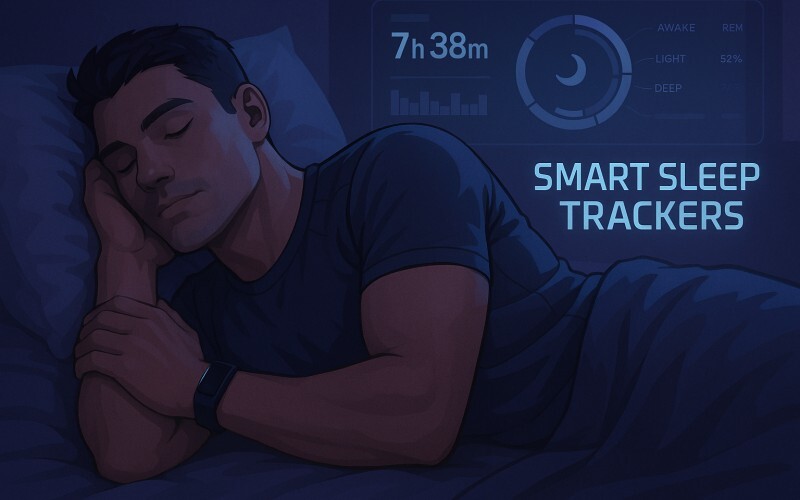
In a world that never seems to slow down, sleep has become a luxury rather than a necessity. Many people struggle with irregular sleep patterns, insomnia, and fatigue—problems that can have lasting effects on physical and mental health. Thankfully, technology has stepped in with a solution: smart sleep trackers. These devices, once considered a luxury, are now mainstream tools that help users understand, optimize, and ultimately improve their sleep.
This blog explores how smart sleep trackers work and how they can significantly contribute to better health and well-being.
What Are Smart Sleep Trackers?
Smart sleep trackers are wearable or non-wearable devices that monitor and analyze your sleep patterns. They use a combination of sensors and algorithms to track vital statistics such as:- Sleep duration
- Sleep stages (light, deep, and REM sleep)
- Heart rate
- Breathing rate
- Movement during sleep
- Snoring and environmental noise (some advanced models)
How Do Sleep Trackers Work?
Smart sleep trackers rely on sensors like accelerometers to detect movement and heart rate monitors to estimate sleep stages. Some high-end models use temperature sensors and oxygen saturation (SpO2) sensors to provide a more comprehensive analysis. Here's a simplified overview of how they work:- You wear the device or place it under your mattress before bed.
- The sensors collect data throughout the night.
- The app analyzes your data, presenting your sleep score, charts, and personalized recommendations.
The Health Benefits of Smart Sleep Trackers
Smart sleep trackers are more than just gadgets for tech enthusiasts. They provide tangible health benefits that can improve your overall well-being in several ways.- Increased Sleep Awareness
- Improved Sleep Quality
- Heart and Respiratory Health Monitoring
- Stress Reduction
- Personalized Sleep Coaching
- Identifying Sleep Disorders
- Enhancing Fitness and Weight Management
Limitations of Smart Sleep Trackers
While the benefits are substantial, smart sleep trackers do have some limitations:- Accuracy: They may not be 100% accurate in measuring sleep stages compared to polysomnography (clinical sleep studies).
- Data Overload: Some users may become overly fixated on metrics, leading to "orthosomnia"—an obsession with achieving perfect sleep.
- Privacy Concerns: As with any health tech, sharing personal sleep data with third-party apps or cloud storage can raise privacy concerns.
Tips for Using Sleep Trackers Effectively
To get the most from your smart sleep tracker:- Wear it consistently: Regular use improves data accuracy.
- Pair it with healthy habits: Avoid caffeine before bed, follow a consistent sleep schedule, and create a calm sleep environment.
- Use the insights: Don’t just check the data—follow the recommendations.
- Stay balanced: Don’t obsess over perfect scores. Focus on overall improvements.
Conclusion
Smart sleep trackers are powerful tools that blend health, technology, and self-awareness. By offering deep insights into your nightly rest, they empower you to make informed decisions about your sleep hygiene, stress levels, fitness, and overall lifestyle. While they won’t solve every sleep problem overnight, they are an excellent step in the right direction—making better sleep and better health achievable for all. So if you're looking to upgrade your wellness routine, consider investing in a smart sleep tracker. Because a better night’s sleep isn’t just a dream—it’s something you can track, measure, and improve.


Comments
Leave a comment Replying to
Comments are reviewed before they appear. Your email is never published.