
Smart Homes in 2025: Fully Automated or Fully Watched?
Explore the future of smart homes in 2025: Will they be fully automated for convenience or fully watched for security and control?
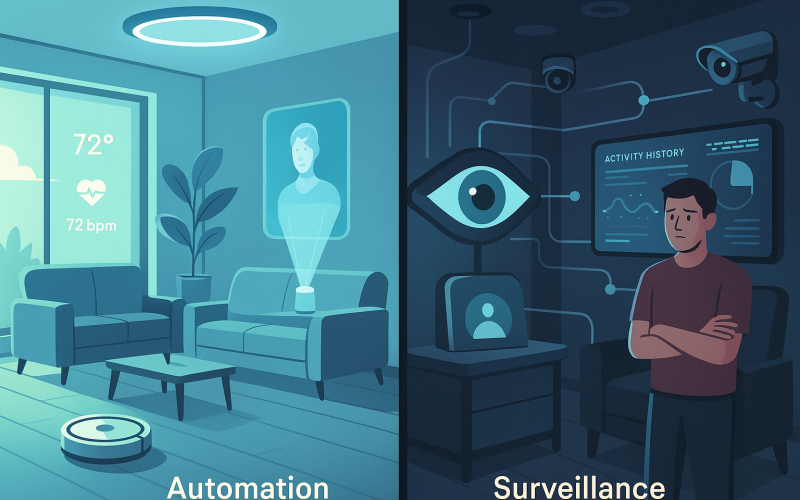
In 2025, the term “smart home” has evolved far beyond voice assistants and motion-sensor lights. Today’s smart homes are increasingly powered by artificial intelligence, IoT ecosystems, and predictive automation—offering convenience, energy efficiency, and security at levels we once only imagined.
But along with these benefits comes a growing concern: Are smart homes empowering us—or monitoring us?
As homes become more interconnected and capable of learning our routines, preferences, and even moods, the line between automation and surveillance is becoming harder to define. Let’s explore how smart homes in 2025 are reshaping modern living and why privacy is emerging as a key concern.
The Rise of the Ultra-Smart Home
The smart home in 2025 is no longer a novelty—it’s a lifestyle standard, particularly in urban and affluent areas. Most new homes come with built-in ecosystems of connected devices:- Smart HVAC systems that adapt to your daily temperature preferences.
- Voice-controlled lighting that adjusts based on time of day or mood.
- AI-powered fridges that track expiration dates, suggest recipes, and auto-order groceries.
- Home robots that clean, patrol, and even communicate with family members.
- Digital mirrors that display your schedule, weather, and wellness stats.
Automation vs. Surveillance: Where’s the Line?
The very systems that provide convenience and customization are also the ones gathering incredible amounts of data:- Your daily routines
- Sleeping patterns
- Conversations (via voice assistants)
- Health data (via smart toilets, wearables, and air monitors)
- Movement within the home (via cameras and motion sensors)
The Role of AI in Home Intelligence
AI has moved from reactive to proactive in 2025. Home systems don’t just respond to commands; they predict needs:- If you usually make coffee at 7:00 a.m., the system will preheat the machine by 6:58.
- If your air quality dips, the purifier will turn on without asking.
- If your mood is detected as stressed (via voice tone or facial cues), calming music and lighting are automatically activated.
Privacy Concerns: Who Owns Your Home Data?
One of the biggest debates around smart homes in 2025 is data ownership:- Who sees your home activity logs?
- Can smart device manufacturers share your data with advertisers?
- What happens if your home data is hacked?
- Local data storage (not cloud-based)
- Full data anonymization
- User opt-in for behavioral analysis
Balancing Convenience with Control
To address rising concerns, developers are building smart homes with customizable privacy settings in 2025:- “Privacy Mode”: Temporarily shuts off microphones and cameras across the home.
- Data Transparency Dashboards: Show exactly what’s being recorded and how it’s used.
- Local AI Processing: Some devices now process data locally (on the device) rather than sending it to the cloud—improving both speed and privacy.
- Biometric Consent Systems: Devices require facial recognition or fingerprint confirmation before storing or sharing any sensitive data.
Smart Homes and Sustainability
One of the less controversial advantages of smart homes in 2025 is their role in sustainability:- AI systems can reduce energy usage by 30–50% through smart lighting, HVAC, and appliance scheduling.
- Smart water systems minimize waste and detect leaks.
- Solar integration and smart battery storage allow homes to operate off-grid during peak hours.
Final Thoughts: Watched or Empowered?
Smart homes in 2025 walk a delicate line between enhancing lives and invading them. While most homeowners welcome the convenience, efficiency, and security, the trade-off in personal privacy remains a growing concern. Whether you're being watched—or simply well-served—often comes down to your understanding of the technology and how much control you retain. As the saying goes: “A smart home should serve you, not surveil you.” The future of smart living lies not just in automation—but in ethical design, transparent systems, and user empowerment.


Comments
Leave a comment Replying to
Comments are reviewed before they appear. Your email is never published.