
Essential General Sports Equipment Every Athlete Should Have
Discover the essential general sports equipment every athlete should have to enhance performance, prevent injuries, and train effectively.
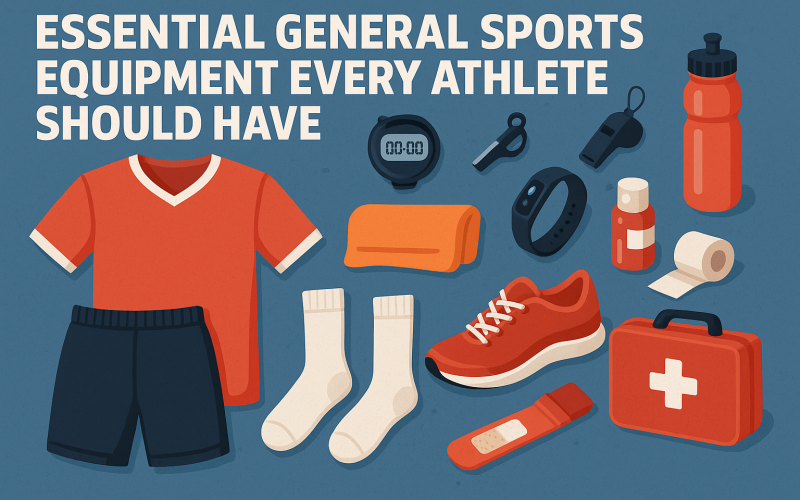
Whether you’re an amateur sportsperson, a student athlete, a weekend warrior, or a professional player, there’s one thing all athletes have in common: the need for reliable, functional, and essential sports equipment. While each sport has its own specialized gear, there are some general items that form the backbone of any athlete’s training and performance routine. This blog explores the essential general sports equipment every athlete should have—the kind of gear that supports not just performance, but also safety, hygiene, discipline, and overall wellness.
- Sportswear (Jersey, Shorts, Shoes, and Socks)
- Jersey and Shorts: Modern sportswear is designed using breathable, stretchable, and sweat-wicking fabrics that keep you dry and comfortable during long sessions. Loose or inappropriate clothing can cause overheating, rashes, or restricted movement.
- Shoes: Choosing the right shoes for your sport is critical. Running shoes, basketball sneakers, football cleats, and tennis shoes are all designed to offer different kinds of support, grip, and impact absorption. A mismatch can lead to blisters or more serious injuries like sprains or stress fractures.
- Socks: Sports socks are thicker, often padded, and designed to absorb sweat while minimizing friction. They reduce the risk of blisters and improve comfort during extended activity.
- Water Bottles and Towels
- Water Bottles: Every athlete needs a dedicated, reusable water bottle to stay hydrated. Dehydration can impair strength, focus, and endurance. Choose a BPA-free, insulated bottle that keeps liquids cool and is easy to clean.
- Towels: A microfiber or sweat-absorbing towel helps wipe off sweat during breaks and post-practice. This reduces skin irritation, acne, and the spread of bacteria on shared equipment like mats or benches.
- Stopwatch or Timer
- Uses: Time laps, sprints, rest periods, warm-ups, and cool-downs. It’s especially important in athletics, swimming, and circuit training.
- Options: From old-school digital stopwatches to smartwatches and phone apps, there are many options based on budget and needs.
- Whistle
- Functionality: Start or stop play, signal warnings, or organize team activity in a crowded or noisy space.
- Types: Traditional whistles (metal or plastic), pea-less models, or even electronic whistles (especially post-COVID for hygiene-conscious settings).
- Fitness Tracker or Smart Band
- Common Features: Heart rate monitoring, calorie tracking, step counting, sleep analysis, oxygen saturation (SpO2), and GPS for distance.
- Why it helps: Knowing how your body responds to training allows you to optimize your routine and avoid overtraining or burnout.
- First Aid Kit
- Essentials to include:
- Band-aids and gauze pads
- Antiseptic wipes or ointment
- Pain relief spray or gel
- Athletic tape or crepe bandage
- Ice packs or cold compress
- Scissors and tweezers
- Usage: Treat blisters, minor cuts, bruises, or muscle strains quickly before they worsen.
Optional But Recommended Additions
While the above six items are fundamental, here are a few extras that can further enhance your training and safety:- Resistance bands (for warm-up and recovery)
- Foam rollers or massage balls (for muscle recovery)
- Notebook or training journal (to log progress, diet, and training reflections)
- Face towel and sanitizer (especially in shared training environments)
Final Thoughts
Sports performance doesn’t rely solely on talent or effort—it’s also shaped by how well you prepare, recover, and care for your body. These general sports equipment essentials create the foundation for a safe, efficient, and enjoyable athletic journey. They’re not just tools—they’re part of a disciplined, growth-oriented mindset that every athlete should cultivate. Whether you play for fun, compete professionally, or train for fitness, make sure your sports kit is always well-stocked. In the long run, these small investments can lead to better performance, fewer injuries, and a more sustainable love for sports.


Comments
Leave a comment Replying to
Comments are reviewed before they appear. Your email is never published.