
50 Ways AI is Changing Various Aspects of Daily Life
Explore 50 ways AI is changing daily life. From personal assistants to self-driving cars, discover how AI improves efficiency and convenience.
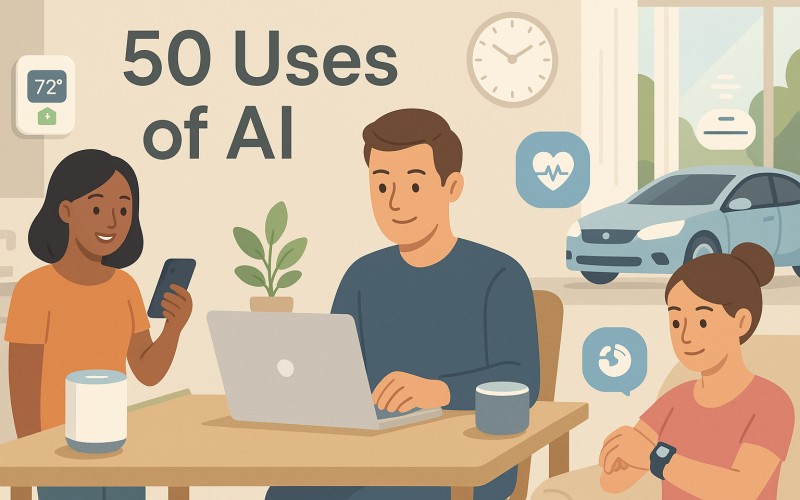
Artificial Intelligence (AI) is no longer a futuristic concept; it’s integrated into our daily lives, making tasks more efficient, convenient, and accessible. From voice assistants to self-driving cars, AI and its subfields, like Machine Learning (ML) and Natural Language Processing (NLP), have become essential in improving the way we interact with technology. In fact, AI is increasingly influencing how we perform routine tasks, whether it’s booking a cab or choosing the right product online. This article will explore 50 ways AI is changing various aspects of daily life, from personal entertainment to safety, and even healthcare. AI is at the core of many technologies you use daily without even realizing it!
Categories of AI Usage in Daily Life
We can categorize AI applications into two broad areas based on how they're used in everyday life:
-
Software/Methodology:
-
These AI systems involve software designed to enhance services without requiring any additional hardware. They primarily involve cloud computing and machine learning algorithms that run on your devices.
-
-
Embodied AI:
-
Embodied AI requires physical devices, such as drones, robots, or even self-driving cars, which integrate AI capabilities to interact with their environment.
-
50 Uses of AI in Day-to-Day Life
1. Taxi Booking Apps
Apps like Uber and Lyft use AI to predict demand, optimize routes, and ensure timely pickups by analyzing historical data and real-time traffic conditions.
2. Voice Assistants
Siri, Alexa, and Google Assistant utilize voice recognition and NLP to understand commands and offer personalized responses, making daily tasks more efficient.
3. Chatbots
AI-powered chatbots like ChatGPT and those used in customer service are capable of understanding and responding to complex queries, improving user experience.
4. Entertainment Streaming Apps
Services like Netflix, Spotify, and YouTube use AI to recommend movies, music, and videos based on your preferences, ensuring a personalized entertainment experience.
5. Personalized Marketing
Brands use AI-driven solutions to create targeted marketing campaigns based on user behavior, leading to more relevant content and better engagement.
6. Image Recognition through Google Lens
Google Lens uses AI for optical character recognition (OCR), translating text, identifying objects, and even scanning business cards directly from your camera.
7. Social Media Algorithms
Platforms like Instagram, Facebook, and TikTok use AI to analyze your behavior and curate content that you’re most likely to engage with, keeping you entertained.
8. Smart Input Keyboards
Mobile keyboards like Gboard and SwiftKey use AI to predict the next word, autocorrect, and offer real-time language translations, making typing faster and easier.
9. Fraud Detection in Banking
AI systems in banks monitor transactions for suspicious patterns, helping to prevent fraud and ensure the security of online transactions.
10. Navigation and Travel
Apps like Google Maps and Waze use AI to predict traffic, suggest routes, and optimize travel times, providing real-time updates on road conditions.
11. Gamified Therapy
AI-powered video games are now being used to help mitigate mental health conditions, offering therapy through gamified experiences that adapt based on user behavior.
12. Fall and Crash Detection
Wearables like the Apple Watch use AI algorithms to detect falls and crashes, automatically alerting emergency contacts and services for immediate help.
13. Self-driving Vehicles
Self-driving cars, including Tesla’s Autopilot, use AI to navigate and make real-time decisions, providing an automated driving experience with minimal human intervention.
14. Facial Recognition Technologies
AI-driven facial recognition is used for secure access in smartphones, laptops, and even at airports to verify identity for safe and convenient interactions.
15. AI-driven Speech Recognition
Google’s Recorder app and AI-powered live captions transcribe spoken words into text, making media more accessible to individuals with hearing impairments.
16. Security and Surveillance
AI systems are used in video monitoring to detect unusual behavior, alerting authorities of potential threats or criminal activity in real-time.
17. Email Filtering
AI-driven email systems can filter spam, categorize messages, and even auto-complete sentences, improving the efficiency of email communication.
18. AI Image Generators
Tools like DALL-E by OpenAI use AI to generate unique and creative images based on text prompts, revolutionizing graphic design, marketing, and digital art.
19. Weather Prediction
AI algorithms are used to analyze vast amounts of meteorological data, helping predict weather patterns more accurately and provide localized forecasts.
20. Internet of Things (IoT)
AI enables smart home devices (thermostats, refrigerators, security cameras) to learn from data, improving automation and making daily life more convenient.
21. Online Shopping Recommendations
E-commerce platforms like Amazon and eBay use AI to suggest products based on your previous purchases, search history, and preferences, enhancing shopping experiences.
22. Personalized Health Monitoring
AI-powered fitness trackers, like Fitbit and Apple Watch, analyze your activity data to offer personalized insights and recommendations for a healthier lifestyle.
23. Virtual Shopping Assistants
Retailers use AI-driven virtual assistants to guide customers through shopping online, providing personalized advice based on past purchases and preferences.
24. Natural Language Processing for Translation
Apps like Google Translate use NLP to help users translate text and speech in real-time, bridging communication gaps across different languages.
25. AI-powered Personal Finance
Personal finance apps use AI to track spending habits, offer budget advice, and even recommend investment opportunities based on your financial situation.
26. AI in Healthcare Diagnostics
AI systems are being used to analyze medical images, predict patient conditions, and offer accurate diagnostic recommendations, improving patient care.
27. Autonomous Drones
Drones powered by AI are used for everything from aerial photography to package delivery, providing a fast, efficient way to perform tasks that would otherwise be time-consuming.
28. AI-based Prescription Filling
AI in pharmacies ensures accurate medication dispensing by reading prescriptions, cross-checking for errors, and tracking patient medications.
29. AI-based Home Security Systems
AI-powered home security systems use facial recognition and behavioral analysis to detect intruders, ensuring enhanced protection for your home.
30. Autonomous Farming Equipment
In agriculture, AI is used to optimize crop management with self-driving tractors, drones for planting, and algorithms for predicting the best harvest times.
31. AI for Climate Change Monitoring
AI models are used to track climate data and predict future changes in weather patterns, helping scientists understand and combat climate change.
32. Automated Content Creation
AI-driven tools like Jasper and Copy.ai are being used by marketers and businesses to automate content creation, saving time while producing high-quality writing.
33. AI-enhanced Customer Service
AI-powered virtual assistants and automated customer service bots are providing round-the-clock support, resolving queries faster and improving customer satisfaction.
34. AI-powered Fraud Prevention in Insurance
Insurance companies are using AI algorithms to analyze claims and detect fraudulent activity, saving time and reducing costs.
35. AI in Fashion Design
AI is transforming the fashion industry by helping designers predict trends, analyze consumer preferences, and even generate new fashion designs using data.
36. Personalized Learning Apps
AI is powering educational platforms that personalize the learning experience, adapting content and pace to the individual learner’s needs and progress.
37. Advanced Robotics in Manufacturing
AI-powered robots are used in factories to automate repetitive tasks, increase production efficiency, and ensure high precision in manufacturing processes.
38. AI in Food Delivery Services
AI helps food delivery platforms like DoorDash and Zomato optimize delivery routes, predict peak hours, and personalize restaurant recommendations.
39. Digital Artists and Musicians
AI tools assist artists and musicians in creating new works by generating music, art, and other content based on user inputs, inspiring creativity in new ways.
40. AI-based Sentiment Analysis
Companies use AI to analyze customer feedback, reviews, and social media mentions to gauge sentiment, helping brands adjust their marketing strategies.
41. AI in Traffic Management
AI-powered traffic systems optimize signal timings and help reduce congestion by analyzing real-time traffic data, leading to smoother traffic flow in cities.
42. AI-assisted Legal Services
Law firms use AI tools to quickly sift through vast amounts of legal documents, improving efficiency and reducing the time needed to prepare for cases.
43. AI-powered Translation for Sign Language
AI tools are being developed to translate sign language into speech or text, enhancing communication for individuals with hearing impairments.
44. AI in Retail Inventory Management
Retailers use AI to monitor stock levels in real-time, predict demand, and automate the replenishment of products, improving inventory efficiency.
45. Predictive Maintenance for Industrial Equipment
AI is used in manufacturing and industrial sectors to predict when equipment will fail, allowing businesses to perform maintenance before a breakdown occurs.
46. AI-powered Sleep Tracking
AI-driven apps and wearables track sleep patterns and offer personalized advice on how to improve sleep quality, helping you wake up feeling refreshed.
47. Personalized Fitness Plans
AI-driven fitness apps like MyFitnessPal and Peloton provide personalized workout routines based on user goals, progress, and preferences.
48. AI-driven Hiring Platforms
HR departments use AI tools to scan resumes, screen candidates, and predict the best-fit employees for a role, streamlining the hiring process.
49. AI for Elderly Care
AI-powered devices are used to monitor the health of elderly individuals, ensuring their well-being and alerting caregivers in case of emergencies.
50. Virtual Reality (VR) and AI in Therapy
AI-powered VR therapies are used in treating PTSD, anxiety, and phobias by creating controlled environments where patients can face their fears gradually.
Conclusion: AI’s Expanding Role in Everyday Life
From personal assistants to autonomous vehicles, AI is everywhere, seamlessly integrated into daily tasks and activities. Its ability to analyze data, make decisions, and improve efficiency is transforming industries and enhancing our everyday lives. As AI continues to evolve, we can expect even more innovative solutions that will make our lives easier, safer, and more connected.
Whether you realize it or not, you are already benefiting from AI in countless ways. As we move forward, the role of AI in shaping our future will only continue to grow, offering even more opportunities for smarter living.

Comments
Leave a comment Replying to
Comments are reviewed before they appear. Your email is never published.