
Smartphones vs Foldables: What’s the Future of Mobile Devices?
Explore the future of mobile tech in our Smartphones vs Foldables debate—what’s next in design, function, and user experience?
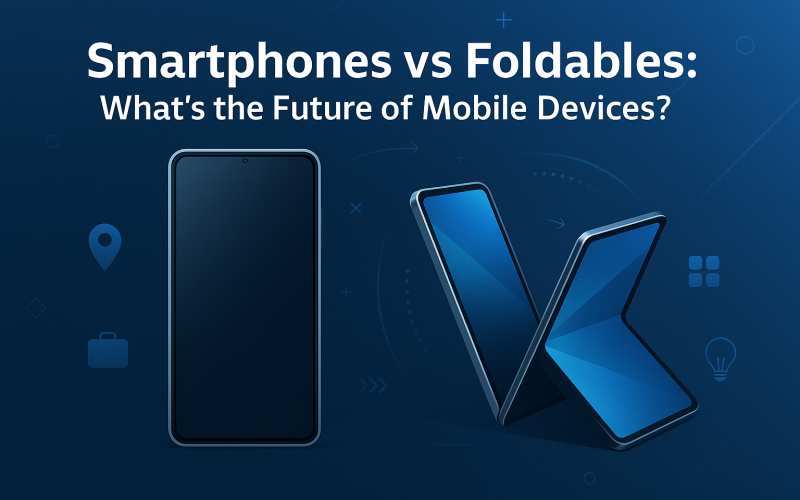
The mobile phone industry has come a long way from the bulky devices of the 1990s to today’s sleek, touchscreen-powered models. But the conversation is now shifting to Smartphones vs Foldables, as a new player challenges the standard slate format — foldable phones. With companies like Samsung, Motorola, and Google investing heavily in foldable technology, the question arises: Are foldables the future of mobile devices, or just a temporary trend?
In this blog, we’ll explore how foldable phones compare to traditional smartphones, their pros and cons, the technology behind them, and what the future may hold for this exciting evolution in mobile design.
The Reign of the Classic Smartphone
For more than a decade, the slab-style smartphone has been the default. These devices offer a perfect balance of portability, power, and screen size. Flagship models from Apple, Samsung, and OnePlus have continually refined this design, offering better cameras, more powerful chips, and longer battery life — all in a slim rectangular form. But innovation has begun to slow. Most modern phones look and function similarly. And while software continues to improve, hardware has plateaued — which has created the perfect opportunity for something new: foldables.What Are Foldable Phones?
Foldable phones are mobile devices with flexible screens that can be folded to reduce size or expand display area. There are two main types:- Book-Style Foldables (e.g., Samsung Galaxy Z Fold 5, Google Pixel Fold)
- These open like a book to reveal a larger tablet-sized screen.
- Clamshell Foldables (e.g., Samsung Galaxy Z Flip 5, Motorola Razr+)
- These fold vertically, making the phone compact when closed and standard-sized when open.
Advantages of Foldable Phones
- Larger Display in a Compact Form
- Multitasking and Productivity
- Novelty & Aesthetic Appeal
- Improved Durability
Limitations of Foldable Phones
- Price
- Durability Concerns
- Battery Life
- Software Optimization
Foldables vs Smartphones: A Quick Comparison
| Feature | Traditional Smartphones | Foldable Phones |
| Portability | Very portable | Bulkier (when unfolded) |
| Screen Size | ️ Limited | Expands when needed |
| Durability | Proven | ️ Improving but fragile |
| Price | More affordable | Premium pricing |
| Productivity Features | ️ Limited multitasking | Superior multitasking |
| Cool Factor | ️ Standardized look | Unique and futuristic |
Why Are Tech Giants Betting on Foldables?
Brands like Samsung, Google, Motorola, Xiaomi, and Huawei are investing heavily in foldable technology. Why?- Innovation Edge: Foldables help brands differentiate in a saturated market.
- New Revenue Streams: Premium foldables can bring higher profits.
- Bridging Devices: Foldables can potentially replace phones + tablets in one device.
- Early Ecosystem Control: Companies want to be the leaders in software and hardware standards for foldables.
What Does the Future Look Like?
Foldables may not replace traditional smartphones overnight, but they’re paving the way for the next wave of mobile innovation. Here’s what we can expect in the coming years:- Lower Prices
- Better Durability
- Hybrid Devices
- Wider Software Support
- Mass Adoption
Final Thoughts
Foldable phones are no longer a gimmick — they’re a serious innovation with the potential to reshape how we use mobile devices. They offer the best of both worlds: the compactness of a phone and the functionality of a tablet. While they may not yet be perfect, the pace of improvement is impressive. So, will foldables replace smartphones completely? Not quite yet. But they’re certainly carving out their place — and if trends continue, your next phone may just fold in half.


Comments
Leave a comment Replying to
Comments are reviewed before they appear. Your email is never published.