
How Voice Assistants Are Becoming Part of Daily Life
Discover how voice assistants are becoming a seamless part of daily life, helping with tasks, info, and smart home control.
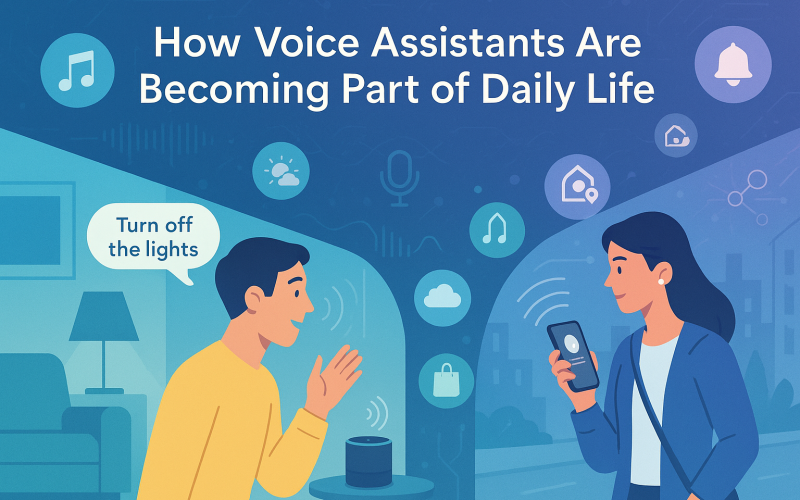
In just a few years, voice assistants have gone from novelty gadgets to indispensable digital companions. Whether it’s asking Alexa to play your favorite song, telling Google Assistant to set a reminder, or asking Siri for the weather forecast, voice assistants are quickly weaving themselves into the fabric of everyday life. With advancements in artificial intelligence (AI), natural language processing (NLP), and machine learning, voice assistants are becoming more intuitive, accessible, and capable than ever before.
But how exactly are these virtual assistants becoming part of our daily routines—and what does the future hold?
What Are Voice Assistants?
Voice assistants are software agents that use voice recognition and natural language processing to interpret and respond to spoken commands. Popular examples include:- Amazon Alexa
- Google Assistant
- Apple Siri
- Microsoft Cortana (retired for consumers but still used in enterprise)
- Samsung Bixby
Daily Life Integration: How We Use Them
At Home: Smart Living Made Easy
One of the most significant areas where voice assistants shine is in the smart home.- Smart Lighting & Appliances: “Alexa, turn off the lights.” Simple voice commands can now control lighting, thermostats, fans, and kitchen appliances.
- Reminders & Alarms: Whether it’s remembering to water the plants or wake up at 6 AM, voice assistants help users manage their day with minimal effort.
- Entertainment: Asking your assistant to play music, stream movies, or even tell a joke has become second nature for many households.
- Cooking Help: In the kitchen, voice assistants serve as hands-free recipe guides, timers, and measurement converters.
On the Go: Voice in Mobile Devices
With voice assistants integrated into smartphones and earbuds, people are interacting with them while walking, commuting, or even exercising.- Navigation: “Hey Google, take me to the nearest petrol station.”
- Texting & Calling: Dictate messages or make calls without touching your phone.
- Searching the Web: Quick voice queries like “Who won the IPL 2024?” or “What’s the stock price of Apple?” offer instant information.
At Work: Productivity Boosters
Voice assistants are also making waves in professional settings.- Scheduling Meetings: You can ask your assistant to check your calendar or set up meetings.
- Taking Notes: Voice-to-text transcription helps with quick note-taking during brainstorming or client calls.
- Task Management: Reminders, to-do lists, and daily briefings help professionals stay organized.
In Shopping: Voice Commerce Is Growing
Voice-based shopping is gaining traction, especially on platforms like Amazon Alexa.- Reordering Products: “Alexa, reorder toothpaste.”
- Checking Order Status: “When will my package arrive?”
- Searching for Deals: Voice assistants help users find discounts or compare prices.
Why Voice Assistants Are Thriving
- 1. Hands-Free Convenience
- Improved Accuracy
- Accessibility
- Personalization
Challenges and Concerns
Despite their benefits, voice assistants aren’t without flaws:- Privacy Issues: Voice assistants are always listening (or at least waiting for a wake word), which raises concerns about data collection and surveillance.
- Security Risks: Voice commands can be misused, especially in shared environments.
- Misinterpretation: Though improving, assistants sometimes misinterpret accents, slang, or complex instructions.
What’s Next for Voice Assistants?
Multilingual and Multimodal Interfaces
Expect smarter assistants that can switch languages mid-sentence, understand context better, and integrate with visual interfaces for more dynamic interactions.Contextual Awareness
Next-gen assistants will better understand your context—location, schedule, past behavior—to offer proactive suggestions without being asked.Healthcare and Education Applications
From managing medications and appointments to aiding in language learning or tutoring, voice tech is set to revolutionize sectors beyond just homes and smartphones.Cross-Platform Integration
As the ecosystem matures, you’ll be able to start a task on one device and finish it on another—with the assistant remembering your intent across devices and platforms.Conclusion
Voice assistants are no longer just a gimmick—they are becoming an integral part of how we interact with technology. As AI grows smarter and more responsive, voice interfaces will likely become the primary method of human-computer interaction for many tasks. Whether you’re managing your home, organizing your day, or simply playing music, voice assistants are quietly—and quickly—becoming part of our everyday routines. So, the next time you say, “Hey Siri,” “Okay Google,” or “Alexa,” remember—you’re not just talking to a device. You’re engaging with the future.


Comments
Leave a comment Replying to
Comments are reviewed before they appear. Your email is never published.