


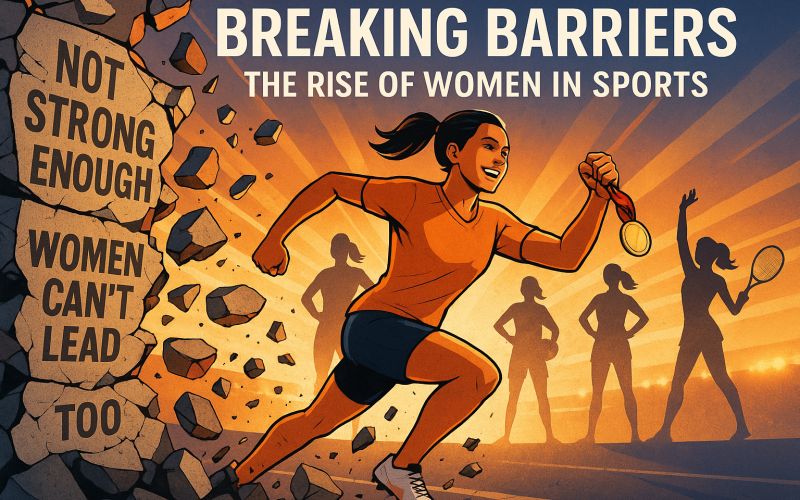
For decades, the world of sports has been dominated by male athletes, with women often sidelined, underrepresented, and underpaid. But in recent years, a significant shift has taken place. Women athletes are not only gaining visibility—they are smashing records, drawing global attention, and rewriting the very rules of the game. The rise of women in sports is one of the most inspiring cultural movements of our time, driven by perseverance, talent, and a growing demand for equality.
A Long Road to Recognition
Women’s sports have always existed—but historically, they lacked the spotlight. In the early 20th century, many believed that sports were too “strenuous” or “unfeminine” for women. Even when women did participate, their achievements were often ignored or trivialized.
Fast forward to today, and we see women dominating headlines, from Serena Williams’ record-breaking tennis career to Megan Rapinoe’s leadership in soccer and P.V. Sindhu’s badminton victories on the world stage. These women—and many more—have helped pave the way for a new generation of athletes who believe that the field, the court, and the track belong to everyone.
The Power of Visibility
One of the most significant drivers of change in women’s sports is visibility. Social media, streaming platforms, and dedicated sports networks have played a huge role in bringing women’s sports to the masses. No longer dependent on mainstream media coverage, female athletes can now connect directly with fans, build their own brands, and share their stories.
Events like the FIFA Women’s World Cup have shattered viewership records. The 2019 final between the U.S. and the Netherlands drew more than 260 million viewers globally—a testament to the growing appetite for women’s sports. Similarly, the Women’s Indian Premier League (WIPL) has created a buzz in cricket-crazy nations like India, offering young girls visible role models to look up to.
Fighting for Equal Pay
One of the most publicized battles in women’s sports has been the fight for equal pay. Despite delivering top-tier performances, many women athletes still earn significantly less than their male counterparts. The U.S. Women’s National Soccer Team (USWNT) brought global attention to the issue by filing a lawsuit demanding equal pay and treatment.
Their efforts paid off in 2022, when U.S. Soccer agreed to equal pay for men and women’s teams—a groundbreaking move that set a precedent for other sports organizations worldwide. Still, the battle is far from over. Many leagues and federations continue to undervalue women’s contributions, making advocacy and policy change essential.
More Than Just Athletes
Female athletes are no longer just players—they’re activists, leaders, and entrepreneurs. They’re using their platforms to address issues like racism, LGBTQ+ rights, mental health, and body positivity.
Take Naomi Osaka, who withdrew from the 2021 French Open citing mental health concerns, sparking global conversations about the pressure athletes face. Or Simone Biles, who bravely spoke out about abuse in gymnastics while still achieving athletic greatness. These athletes are reshaping public perceptions and reminding the world that strength isn’t just physical—it’s also emotional and moral.
The Role of Institutions
Governing bodies and sponsors play a crucial role in leveling the playing field. Progress is happening, albeit slowly:
- The Olympic Games now feature near-equal male and female participation.
- Major sponsors like Nike, Adidas, and Puma are investing more in women’s teams and gear.
- Leagues like the WNBA, Women’s Super League, and FA Women’s Championship are gaining more funding and media rights.
However, true equality requires systemic change: equal access to facilities, balanced media coverage, transparent sponsorship deals, and opportunities from the grassroots to the professional level.
A Global Movement
What makes the rise of women in sports even more exciting is its global reach. From India to Nigeria, Brazil to China, women are taking center stage:
- P.V. Sindhu and Saina Nehwal have turned badminton into a household sport in India.
- Caster Semenya from South Africa has fought discriminatory gender policies while dominating track events.
- Brazilian forward Marta is considered one of the greatest footballers—male or female—of all time.
These athletes are not just breaking records—they’re breaking stereotypes, showing that talent knows no gender or geographic boundaries.
Inspiring the Next Generation
Perhaps the most beautiful impact of this movement is its effect on young girls. Seeing women athletes succeed on the global stage tells young girls that their dreams are valid. It helps them believe that they, too, can aim for Olympic gold, World Cup trophies, or even a career in coaching, commentary, or sports science.
Schools, parents, and communities now have a responsibility to nurture this interest. That means investing in girls’ sports programs, hiring more female coaches, and creating safe, inclusive environments for them to thrive.
The Road Ahead
While the rise of women in sports is worth celebrating, it’s important to remember that the journey is far from over. Gender bias, lack of media coverage, and limited funding continue to affect women’s participation at all levels.
But change is happening—and it’s unstoppable.
Every time a woman steps onto the field, lifts a trophy, or shares her story, she inspires thousands more to chase their dreams. The barriers are breaking, the crowds are growing, and the future of sports looks more inclusive, exciting, and powerful than ever.
Final Thoughts
The rise of women in sports isn’t just a trend—it’s a revolution. It’s a story of courage, resilience, and excellence. As fans, content creators, and human beings, we all have a role to play in amplifying women’s voices and celebrating their achievements.
Let’s keep the momentum going.