

Once upon a time, fandoms were cozy corners of the internet — places to gush about your favorite artist, trade concert stories, and share inside jokes. Fast forward to 2025, and fandoms have evolved into something much more complex. They’re now hyper-organized, socially aware, and globally networked communities. They can propel artists to record-breaking heights, dominate social media algorithms, and even influence political discourse. But with this power has come an inevitable side effect: fandom wars.
From Taylor Swift’s Swifties to BTS’s ARMY, fandoms have become more than fan clubs — they’re digital nations with their own cultures, rules, and rivalries. In this blog, we’ll explore how fandoms rose to power, why fandom wars have become so intense, and what this all means for the future of pop culture.
The New Definition of Fandom
Traditionally, fandoms were niche groups — Trekkies, Potterheads, Directioners — gathered around shared interests. But in the age of social media, particularly on platforms like X (formerly Twitter), TikTok, Reddit, and Instagram, fandoms are no longer fringe. They are mainstream cultural forces.
Fandom isn’t just about admiring someone’s work anymore; it’s about advocacy, identity, and loyalty. For many fans, supporting an artist like Taylor Swift or BTS isn’t just about music. It’s about feminism, mental health, self-love, racial equality, and pride in one’s heritage.
This blending of art, identity, and activism has intensified fan loyalty — and thus, intensified fan rivalries.
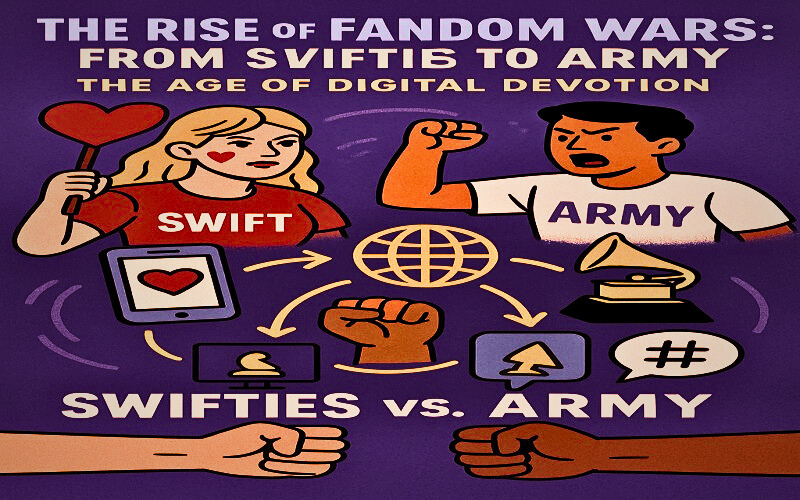
Swifties vs. ARMY: Two Titans
Arguably two of the most powerful fandoms in the world, Swifties (Taylor Swift fans) and ARMY (BTS fans) exemplify the influence and volatility of modern fandoms.
Swifties are known for their detective-like ability to decode Taylor’s lyrics, social media posts, and hidden clues. Taylor has cultivated this culture of “easter eggs,” which has helped create a deeply engaged fanbase that’s emotionally and intellectually invested in her music and personal journey.
ARMY, meanwhile, has built an entire global movement around BTS, a seven-member Korean boy band. They’re known for their fierce defense of the group, highly organized streaming parties, and viral hashtags. ARMY is also socially and politically active — from raising millions for charities to crashing racist hashtags with K-pop fancams.
Both groups are intensely protective of their idols. And when news surfaces of broken records, Grammy nominations, or questionable headlines, battles often erupt. Sometimes over chart positions, other times over cultural representation. The competition is fierce — but it’s also deeply personal.
Anatomy of a Fandom War
So how do fandom wars actually begin?
They often spark from:
- Chart Battles: Competing for Billboard Hot 100 or streaming milestones.
- Award Snubs: When one artist wins and another doesn’t, especially in categories like “Album of the Year” or “Best Pop Performance.”
- Media Comparisons: Headlines like “Is X the Next Taylor Swift?” or “BTS vs. [insert Western boyband]” can fuel outrage.
- Cultural Biases: Discussions around language barriers, Western dominance, and the Grammys’ treatment of K-pop or women artists often turn into polarized debates.
- Tweet Wars: A single tweet, misinterpreted lyric, or fan theory can spiral into a full-blown digital feud.
The most viral fandom wars often feature millions of users engaging in online battles using hashtags, memes, edits, and sometimes harassment campaigns.
When Stans Become Soldiers
The term “stan” — a blend of “stalker” and “fan” (originating from Eminem’s 2000 song “Stan”) — has been reclaimed by fans to mean passionate supporters. But in the context of fandom wars, stans often take on a militant role.
They:
- Mobilize online at lightning speed.
- Coordinate voting in fan-based awards.
- Mass-report rival accounts.
- Engage in ratio battles to silence critics.
- Create viral content that dominates trends.
For example, when BTS’s ARMY was accused of inflating Spotify streams, they produced detailed spreadsheets and tutorials showing legal streaming methods. Swifties, similarly, have mounted massive campaigns to promote re-releases and fight media narratives surrounding Taylor’s personal life.
These actions aren’t just fan behavior — they’re digital activism mixed with marketing expertise.
The Positives: Community and Collective Power
Despite the drama, fandoms have brought about positive social change and created strong global communities.
- Charity Initiatives: ARMY has raised funds for Black Lives Matter, flood victims, and education programs. Swifties regularly donate to animal shelters or support fellow fans during tough times.
- Mental Health Support: Fandom communities often serve as safe spaces where fans find acceptance, validation, and friends — especially for LGBTQ+ youth, neurodivergent individuals, or socially isolated fans.
- Cultural Exchange: Global fandoms like ARMY have introduced millions to Korean language, food, and customs, helping normalize cross-cultural appreciation.
- Fan-Created Art and Media: Fandoms drive creativity. From fan fiction and fan art to theory videos and choreographed dance covers, they expand the boundaries of how art is consumed and celebrated.
The Negatives: Toxicity and Cancel Culture
Of course, not everything is rainbows and lightsticks. Fandoms, particularly when weaponized, can become toxic.
- Online Harassment: Rival fans and even journalists critical of an artist can become targets of intense online bullying.
- Echo Chambers: Fandoms can become bubbles where dissent or critique is unwelcome, leading to groupthink and hostility.
- Cancel Culture: Sometimes a misunderstood statement or minor mistake by a celebrity or fan leads to large-scale “cancelling,” driven by stan outrage.
- Fan Wars Distracting From Art: When the conversation becomes more about who’s winning and less about the music, creativity takes a back seat to competitiveness.
In extreme cases, fandoms have doxxed users, sent threats, or caused real-world consequences over online disagreements.
Media’s Role in Fueling the Fire
The media is not innocent in this. Sensationalist headlines, clickbait comparisons, and over-hyped “feuds” between artists often pour fuel on the fandom fire.
Articles like “Taylor Swift vs. Beyoncé: Who Rules the Charts?” or “Can BTS Ever Win a Grammy?” aren’t just benign debates — they’re conversation starters that ignite entire Twitter storms.
And while media benefits from engagement, it often glosses over the underlying social dynamics — like racial representation, misogyny, and cultural elitism — that fans are actually arguing about.
Fandom as Identity
Why are fans so invested? Because for many, being part of a fandom is part of their identity.
It offers:
- Belonging: In a lonely digital world, being a Swiftie or ARMY is a ticket to community.
- Empowerment: Supporting an artist can feel like pushing back against injustice — whether that’s gender inequality in music or Western bias in awards.
- Expression: Through fan edits, art, dance, and social media posts, fans express themselves, connect with others, and even launch creative careers.
But when identity and loyalty mix, criticism becomes personal — and wars erupt.
The Evolution: Where Do We Go From Here?
Fandoms are only getting stronger — and younger. Gen Z and Gen Alpha are growing up in a world where fandoms are political, emotional, and algorithmic.
But the future doesn’t have to be toxic. Here’s where the evolution could go:
- Digital Literacy: Teaching fans to engage critically, recognize misinformation, and handle conflict can curb harassment.
- Artist Accountability: Celebrities can influence fan behavior by calling out toxicity and modeling respect — as many already do.
- Platform Responsibility: Social platforms need better moderation tools, especially during fandom clashes.
- Celebrating Collaboration: Fandoms can unite over common causes — mental health, anti-racism, climate change — instead of fighting over numbers.
And as more fans mature within these spaces, the culture can shift from competition to cooperation.
Conclusion: More Than Just Fans
Fandom wars may seem petty to outsiders, but they reflect deeper currents — about identity, power, justice, and the meaning of art in the digital age. Swifties and ARMY aren’t just fans. They’re organizers, creators, protectors, and warriors in a world where culture is currency.
So the next time you see a trending hashtag like #BuySevenOniTunes or #JusticeForRedTV, remember: it’s not just about the charts. It’s about belonging. It’s about power. It’s about the collective voice of millions saying, “This matters to me.”
Whether we’re in a war or a love fest, one thing is certain: fandoms are here to stay — louder, stronger, and more passionate than ever.
Let the streaming begin. And maybe… let the healing begin too.