

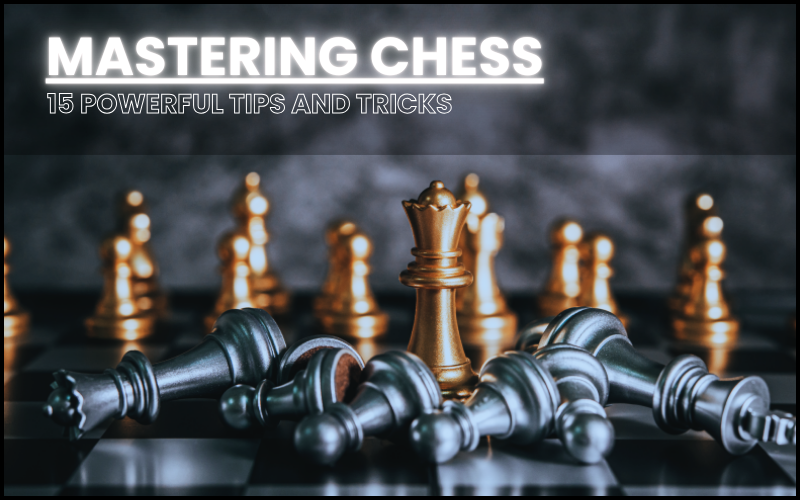
Chess is not just a game — it’s a battle of wits, patience, and strategy. Whether you’re a curious beginner or an improving club player, learning key principles and practical tricks can make a dramatic difference in how you play and win. In this blog, we’ll break down 15 essential chess tips and tricks that will elevate your game, help you avoid common mistakes, and increase your chances of checkmating opponents with confidence.
- Control the Center
The first thing every chess player should understand is the importance of the board’s center — the four central squares (e4, d4, e5, and d5). Controlling the center gives your pieces maximum mobility and helps you dictate the pace of the game. Start by advancing your center pawns and positioning your minor pieces (knights and bishops) to exert influence over this critical area.
- Develop Your Pieces Early
One of the golden rules of chess is rapid development. That means bringing out your knights and bishops early, ideally in the first few moves. Avoid moving the same piece repeatedly or pushing too many pawns at the start. Development leads to a strong position and enables you to castle safely, connect your rooks, and plan your next stage of attack.
- Don’t Bring Your Queen Out Too Soon
While it’s tempting to flex your queen’s power early, doing so often leaves her exposed to attacks from lesser pieces. Instead, wait until you’ve developed your minor pieces and the board is open enough for your queen to move safely and effectively.
- Castle Early and Often
Castling is one of the most important defensive moves in the game. It secures your king behind a wall of pawns and helps activate your rook. Aim to castle within your first 10 moves unless tactical reasons suggest otherwise. Whether you castle kingside or queenside, the priority is keeping your king safe.
- Think Ahead
Chess isn’t just about reacting to your opponent’s move — it’s about thinking ahead. Try to visualize 2–3 moves into the future. Before making any move, ask yourself: “If I go here, what might my opponent do next?” Strategic foresight is what separates good players from great ones.
- Learn Basic Tactical Patterns
Tactics win games. The most successful players recognize patterns quickly. Some must-know tactical ideas include:
- Forks: One piece attacks two at once.
- Pins: A piece is immobilized because moving it would expose a more valuable one.
- Skewers: A higher-value piece is attacked and must move, revealing a lesser one behind it.
- Discovered Attacks: A piece moves, revealing an attack from another piece behind it.
Train with tactical puzzles daily to sharpen your vision.
- Avoid Unnecessary Pawn Moves
Pawns are useful for controlling space and defending your pieces, but excessive or careless pawn moves can create weaknesses that are hard to fix. Every pawn move changes the shape of your position permanently. Push them only when they support development, control the center, or open lines for attack.
- Know Basic Endgames
Many games reach the endgame phase, where only a few pieces remain. Learning basic endgames gives you an edge over opponents who rely solely on tactics. You should know how to:
- Checkmate with king + queen vs. king
- Checkmate with king + rook vs. king
- Use your king actively in the endgame
- Promote a pawn with correct opposition
- Use Your King as a Weapon (in the Endgame)
Unlike in the opening and middlegame, your king becomes a strong piece in the endgame. Bring your king toward the center, use it to support pawn promotion, and challenge your opponent’s king directly when the coast is clear.
- Don’t Play Hope Chess
Never make a move and just hope your opponent makes a mistake. Every move should have a purpose — either to improve your position, restrict your opponent, or create threats. Playing with intention leads to better decisions and fewer blunders.
- Play the Board, Not the Player
It’s easy to get intimidated by opponents with high ratings or reputations. But no matter who you’re playing against, the board doesn’t change. Focus on the position and the best possible move, not your opponent’s skill level.
- Stay Calm After Mistakes
Mistakes are part of every chess game. The key is not to panic. Stay focused, regroup, and look for counterplay. Many games are won because the opponent overconfidently tries to convert a lead and blunders.
- Practice Puzzles Daily
Chess puzzles are the gym of the chess mind. Spend 10–15 minutes daily solving puzzles to sharpen your tactical awareness and board vision. Websites like Chess.com and Lichess.org offer great free resources.
- Analyze Your Games
Win or lose, always review your games. Look for tactical misses, weak moves, and better alternatives. Many platforms offer computer-assisted analysis to help identify mistakes and blunders. The more you learn from each game, the faster you improve.
- Play Longer Games
While blitz (fast) games are fun, they don’t give you time to think deeply. Playing rapid or classical time controls allows you to build solid habits, learn better decision-making, and reduce careless errors.