





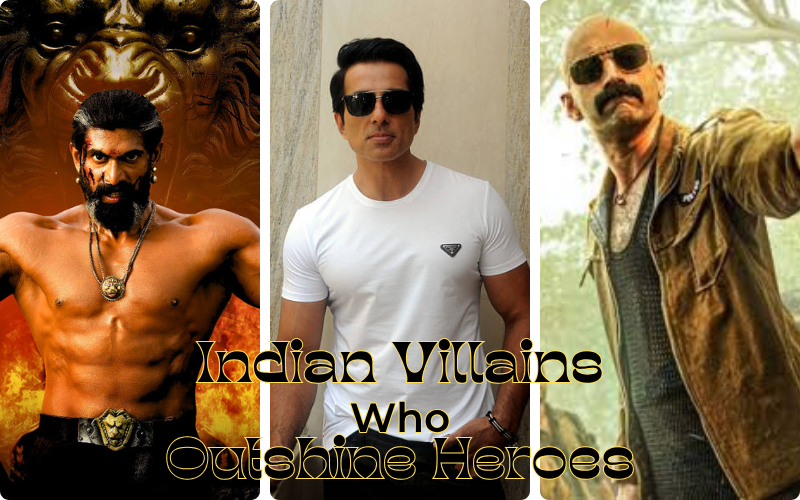
Indian cinema has always been driven by larger-than-life characters, grand emotions, and dramatic storytelling. While heroes have traditionally been the face of Indian films—righteous, brave, and idealistic—there’s a compelling truth that can’t be ignored: Indian villains are often more popular, memorable, charismatic, and loved than their heroic counterparts.
From the iconic Gabbar Singh in Sholay to the magnetic Pushpa Raj, from Mogambo’s theatricality to Raees’s morally grey persona—Indian audiences have long been drawn to characters who operate outside the boundaries of virtue.
But why are Indian villains so popular? Why do we admire the ones who defy the rules, sometimes more than those who uphold them? This blog explores the psychological, cultural, cinematic, and historical reasons behind the dark side of popularity.
- Indian Villains Have Stronger Personas
Villains in Indian films often come with a commanding screen presence, elaborate costumes, punchy dialogues, and a backstory that justifies their anger or ruthlessness. Whether it’s Amrish Puri’s Mogambo, Pran’s Sher Khan, or Ranveer Singh’s Alauddin Khilji, these characters are not just obstacles—they are unforgettable forces.
Unlike Western cinema where villains may be subtle or quiet, Indian villains are bold, loud, and stylistically intense. They dominate the screen and overshadow even the most idealistic hero.
- They Get the Best Dialogues and Style
Who can forget iconic lines like:
- “Mogambo khush hua!”
- “Kitne aadmi the?” – Gabbar Singh
- “Don ka intezaar toh 11 mulkon ki police kar rahi hai…” – Don
Villains in Indian movies often get the most quotable lines. Their mannerisms, laughter, and style leave a lasting impression on the audience. Even their entrance scenes are grander than that of the hero. This dramatic treatment creates a lasting legacy.
Plus, villains are usually dressed in stylish or distinctive attire—making them more visually appealing, especially in mass masala cinema.
- The Complexity of Morality in Indian Society
Indian culture has deep-rooted themes of karma, dharma, and redemption. But it also recognizes that life isn’t black-and-white. Characters who are morally grey, like Raavan in mythology or Karna in the Mahabharata, are not just villains—they are tragic, layered, and often sympathetic.
This complexity has seeped into Indian films.
Characters like:
- Raees – a criminal with a good heart
- Pushpa – a smuggler who rises from the bottom
- Kabir Singh – flawed but passionate
…are embraced by audiences not despite their flaws, but because of them. The Indian audience often relates to characters struggling against injustice, poverty, or betrayal—even if they turn to the “wrong” path.
- Villains Represent Power and Rebellion
In a country where many feel suppressed—by poverty, bureaucracy, patriarchy, or caste—villains often become symbols of resistance.
When a character like Sultan Mirza (Once Upon a Time in Mumbaai) or Rocky Bhai (KGF) takes control of his destiny, rises from the slums, and takes on the system—he is seen as a hero in the eyes of the oppressed, even if the law calls him a criminal.
Villains represent the fantasy of breaking free. They do what others can’t. They say what others won’t. That’s a seductive form of power.
- Heroes Are Sometimes Unrealistically Ideal
In traditional Indian cinema, heroes were depicted as:
- Always respectful to parents
- Never touching alcohol
- Saving the damsel in distress
- Defeating evil with no personal flaw
This kind of unrealistic perfection can feel dull or disconnected, especially to younger audiences.
On the other hand, villains or antiheroes like Kabir Singh, Suriya’s Rolex, or Shah Rukh Khan’s Don are flawed, emotional, and unpredictable. They cry, they bleed, they rage—and that makes them more human and real to viewers.
- Bollywood’s Golden Age of Villains
The 1970s and 1980s saw the peak of villain popularity in Indian cinema. Actors like Amrish Puri, Amjad Khan, Pran, Prem Chopra, and Danny Denzongpa became legends—not just because of their evil deeds, but due to their larger-than-life characters.
Villains like:
- Lion Sher Khan – a criminal with a heart
- Ajit’s Teja – with his eccentric English
- Kaancha Cheena – sophisticated yet deadly
…weren’t just opposing forces. They defined the genre, sometimes more than the hero.
Even in the South Indian film industry, villains like Raghuvaran, Prakash Raj, and Jagapathi Babu became household names due to their magnetic performances.
- Rise of the Antihero in Modern Indian Cinema
Indian cinema is increasingly embracing the antihero—a character who blurs the line between heroism and villainy.
- Arjun Reddy/Kabir Singh – Toxic, arrogant, but deeply passionate
- Pushpa Raj – Defies systems, breaks laws, wins hearts
- Rocky Bhai (KGF) – Ruthless killer, yet savior of the oppressed
- Shah Rukh Khan’s Pathaan and Raees – Men of contradiction
These characters break the law, hurt people, or indulge in violence—but they also stand for loyalty, love, and justice in their own way.
Audiences, especially Gen Z and millennials, are drawn to these non-traditional protagonists who reflect the messiness of real life.
- Cultural Fascination with Redemption
Indian audiences love a good redemption arc.
Villains who turn good or have a chance to redeem themselves are often celebrated more than consistent heroes. Think of:
- Sanju (Sanju) – A flawed, real-life figure with a troubled past
- Baahubali’s Bhallaladeva – Loved for his intensity, even though he’s evil
- Joker (Indian remakes & influences) – Tragic, misunderstood, and empathetic
The possibility of changing for the better, of suffering leading to realization, is a theme that deeply resonates with Indian values.
- Influence of South Indian Cinema
South Indian cinema—particularly from Tamil and Telugu industries—has redefined villainy.
Characters like:
- Bhairava in Salaar
- Bhanwar Singh in Pushpa 2
- Bobby Simha in Jigarthanda
…are layered, brutal, and strangely likable. Their swag, style, and backstory often become the soul of the film.
South Indian villains are often written with depth and designed to match or even outshine the hero. This trend has heavily influenced Bollywood, making antiheroes more acceptable in mainstream Hindi cinema.
- Villains as Cultural Icons
From movies to memes, Indian villains are a huge part of pop culture.
- Gabbar Singh masks are worn during festivals.
- Mogambo became a way to describe a person with ego.
- Don was remade with fanfare.
Even YouTube channels, Instagram reels, and meme pages celebrate villain dialogues, mimic their mannerisms, and elevate them to cult status.
Villains have become fashion statements, fan obsessions, and symbols of attitude.
Conclusion: The Allure of the Dark Side
The rising popularity of Indian villains isn’t a sign that audiences support evil—it’s a sign that storytelling has evolved.
We now appreciate complexity over perfection, style over simplicity, emotion over ethics. Villains represent the unfiltered, raw, passionate human experience—something that often resonates more deeply than the noble, disciplined journey of a traditional hero.
In a society grappling with inequality, inner conflict, and the search for identity, villains offer an emotional release, a fantasy, and—ironically—a truth. They make us feel something intense and unforgettable.
So the next time you cheer for the villain, you’re not alone. You’re just one of millions who recognize that sometimes, the most powerful stories are told from the shadows.
Which Indian villain is your favorite—and why? Drop your thoughts in the comments!


