
N T Rama Rao: Icon of Telugu Cinema & Politics
Explore the legacy of N.T. Rama Rao, the legendary actor and leader who transformed Telugu cinema and reshaped Andhra politics.
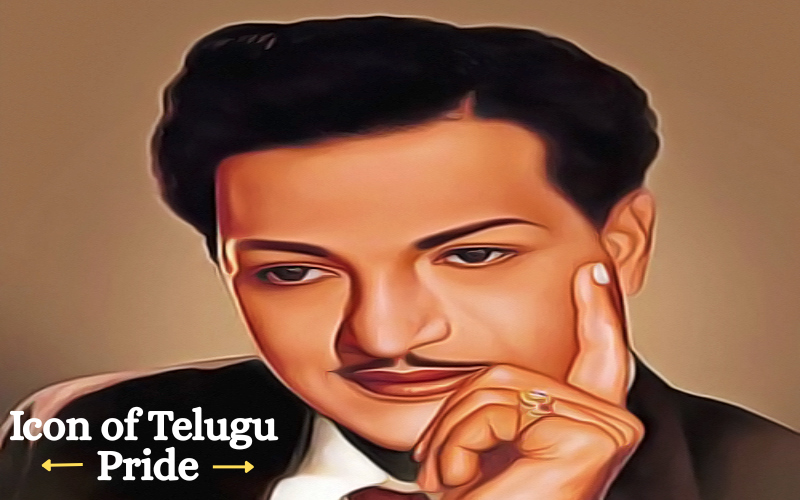
Nandamuri Taraka Rama Rao, affectionately known as NTR, is a name etched in gold in the chronicles of Indian cinema and politics. Born on May 28, 1923, in the small village of Nimmakuru in Andhra Pradesh, NTR's life journey is an inspirational saga of grit, vision, and unparalleled charisma. Rising from humble beginnings, he carved out a niche for himself as a larger-than-life figure both on the silver screen and in the corridors of political power. With a multifaceted career that spanned acting, directing, producing, screenwriting, and governance, NTR became a beacon of Telugu pride and cultural resurgence.
Early Life and Entry into Cinema
NTR's early life was steeped in modesty. He was born to a farming couple and was later adopted by his uncle and aunt, who were childless. His formative years were grounded in simplicity, with a strong emphasis on education. After graduating from Andhra-Christian College in Guntur, he briefly worked as a sub-registrar. However, his stint in the administrative service lasted only a few weeks, as his heart was always set on the performing arts. His cinematic journey began in 1949 with a minor role in the film Mana Desam. Although his role was small, it marked the beginning of an extraordinary career. He soon made a mark with lead roles in Palletoori Pilla (1950), Pathala Bhairavi (1951), and Malliswari (1951), which catapulted him to stardom. These early performances displayed his natural flair for dramatics and dialogue delivery, characteristics that would define his screen persona for decades to come.Cinematic Brilliance: The Mythological Maestro
NTR's real claim to fame came with his portrayals of mythological and historical characters. His rendition of Lord Krishna in Mayabazar (1957) remains one of the most iconic performances in Indian cinema. The film itself is considered a masterpiece, and NTR's performance contributed significantly to its legendary status. Over the course of his career, he played the role of Lord Krishna in 17 films, including Sri Krishnarjuna Yudham (1962) and Daana Veera Soora Karna (1977). He also played Lord Rama in Lava Kusa (1963), Lord Vishnu in Sri Venkateswara Mahatyam (1960), and Lord Shiva in Dakshayagnam (1962), among others. These roles were not just acting assignments for NTR; he approached them with a deep sense of spiritual and cultural responsibility. His portrayals were marked by a divine aura, impeccable diction, and graceful body language, making him synonymous with these deities in the public consciousness. Apart from his divine roles, he brought to life many characters from the epic Mahabharata, including Karna, Duryodhana, Arjuna, and Bhishma. His ability to embody complex characters with varying shades of emotion showcased his depth as an actor. Notably, for his role in Nartanasala (1963), he learned Kuchipudi dance at the age of 40, underlining his commitment to authenticity and excellence.Transition to Social Dramas and Film Production
As the decades passed, NTR shifted gears from mythology to contemporary social dramas. He began portraying roles that resonated with the everyday struggles of the common man. Films like Devudu Chesina Manushulu (1973), Adavi Ramudu (1977), Vetagaadu (1979), and Justice Chowdary (1982) showcased him as a champion of justice and social equity. His characters often stood up against systemic corruption and social evils, earning him the moniker "Messiah of the Masses." In addition to acting, NTR also ventured into filmmaking. He established the National Art Theater in 1953 and later founded Ramakrishna Cine Studios in 1976, named in memory of his son. His directorial debut Seetharama Kalyanam (1961) was both a critical and commercial success. However, it was Daana Veera Soora Karna (1977) where he truly showcased his versatility by playing three pivotal roles—Karna, Duryodhana, and Krishna—while also directing and producing the film.Political Ascent: Championing Telugu Identity
In 1982, disenchanted with the existing political landscape, N T Rama Rao took a bold step and entered politics by founding the Telugu Desam Party (TDP). His entry was driven by a strong desire to uplift the self-respect of Telugu-speaking people, who he felt were being sidelined in national politics. With his magnetic personality and mass appeal, he led the TDP to a historic victory in the 1983 state elections, becoming the Chief Minister of Andhra Pradesh. His political tenure was marked by several transformative initiatives:- Subsidized Rice Scheme: He launched the Rs. 2-per-kg rice scheme, providing affordable food to the poor.
- Prohibition of Alcohol: NTR implemented a statewide ban on alcohol to combat addiction and domestic issues.
- Administrative Reforms: His government worked to decentralize power, enhance bureaucratic efficiency, and reduce corruption.
Legacy and Honors
NTR's legacy is not confined to his filmography or his political achievements. He was a cultural icon whose influence transcended generations. His accolades include:- Padma Shri: Conferred in 1968 by the Government of India for his contributions to Indian cinema.
- National Film Awards: Three awards for co-producing Thodu Dongalu (1954), Seetharama Kalyanam (1960), and directing Varakatnam (1970).
- Nandi Awards: Best Actor for Kodalu Diddina Kapuram (1970).
- Filmfare Awards South: Best Telugu Actor in 1972.
Enduring Influence in 2025
Even in 2025, NTR's legacy remains deeply embedded in the cultural fabric of Andhra Pradesh and beyond:- Cinematic Heritage: His grandson, N.T. Rama Rao Jr., continues the family tradition, emerging as one of the leading actors in Telugu cinema.
- Political Continuity: The Telugu Desam Party remains a key political entity in the state, upholding the principles and vision set by its founder.
- Cultural Reverence: His films are periodically re-released, and his portrayal of mythological characters continues to set benchmarks for actors across generations.
Conclusion
N.T. Rama Rao's life is a profound narrative of transformation, influence, and unwavering dedication. From enchanting millions on the silver screen to leading a political movement rooted in self-respect and dignity, he wore many hats with unmatched grace and conviction. His story is not just one of fame and power but of purpose and people-centered leadership. As we look back from 2025, NT Rama Rao continues to inspire as a symbol of excellence in both art and governance, embodying the timeless spirit of Telugu pride.


Comments
Leave a comment Replying to
Comments are reviewed before they appear. Your email is never published.