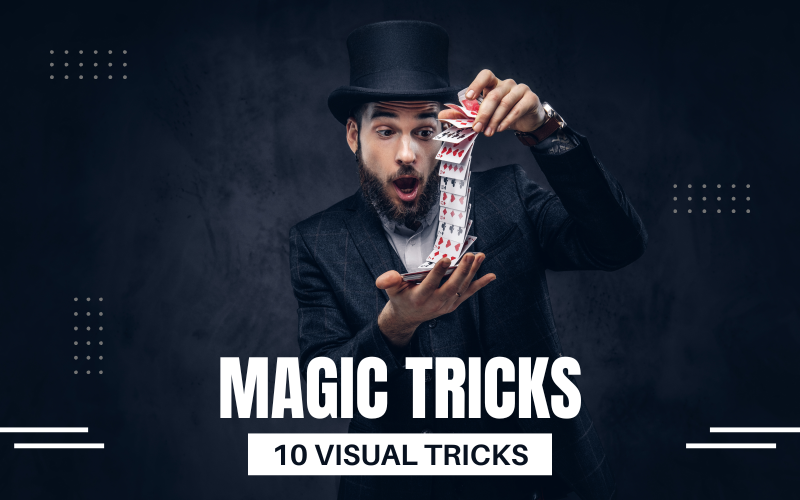
Magic is an art that has fascinated people for centuries. The ability to make the impossible seem possible has always intrigued audiences, from Harry Houdini’s daring escapes to modern magicians like David Copperfield and Dynamo. But you don’t need years of practice or expensive props to get started. In fact, some of the best magic tricks for beginners require only basic items you likely already have at home.
Whether you want to impress your friends, entertain at parties, or simply learn something new, magic can be both fun and rewarding. In this blog, we’ll introduce some simple yet powerful magic tricks that any beginner can master. These tricks are easy to learn, require minimal preparation, and most importantly, they will amaze and inspire your audience!
Why Start with Magic?
Magic isn’t just about pulling rabbits out of hats—it’s about creating wonder, delight, and amazement. For beginners, magic offers many benefits:
- Enhances Communication Skills: When performing, you’re often engaging an audience, which improves your public speaking and storytelling abilities.
- Boosts Confidence: Successfully performing a magic trick builds self-assurance, especially when you see the looks of amazement on your audience’s faces.
- Improves Hand-Eye Coordination: Many magic tricks require precise hand movements, which helps develop dexterity and coordination.
- Engages Your Creativity: Magic tricks are like puzzles that require you to think outside the box. As you improve, you can start inventing your own tricks and adding your own personal touch.
With these benefits in mind, let’s jump into some beginner-friendly tricks that will help you get started on your magical journey!
- The Floating Ring Trick
Effect: A ring floats up and down a pencil, pen, or similar object as if defying gravity.
What You Need:
- A lightweight ring
- A pencil or pen
- Invisible thread (clear thread)
How It Works:
This trick utilizes invisible thread, which is virtually impossible to see in the right lighting. The thread is tied to your thumbs, and the ring is placed on it. By subtly moving your thumbs apart or closer together, the ring will appear to float up and down the pencil. The key is to keep the thread hidden from the audience’s view.
Why It’s Great for Beginners:
This illusion introduces you to misdirection and the use of hidden props. Plus, it’s a simple trick that can be learned quickly but has a big visual impact. The floating ring is one of those tricks that will leave your audience in awe.
- The Disappearing Coin Trick
Effect: A coin placed under a cup vanishes when the cup is lifted.
What You Need:
- A coin
- A plastic or paper cup
- A napkin or small cloth
- A duplicate coin (glued to the inside of the napkin)
How It Works:
To perform this trick, secretly glue a duplicate coin to the inside of the napkin. When you cover the coin with the cup, it appears to vanish as the napkin is lifted, but the duplicate coin remains under the cup. The real coin is secretly palmed or dropped into your lap while the audience is distracted by your movements.
Why It’s Great for Beginners:
This trick teaches you basic sleight-of-hand techniques and helps you practice smooth movements and timing. It’s a perfect example of how powerful simple props can be when used effectively.
- The Mind-Reading Card Trick
Effect: You correctly identify the card that a spectator has chosen.
What You Need:
- A deck of playing cards
How It Works:
Before starting, secretly memorize the bottom card of the deck. Perform a false shuffle to keep the bottom card in place. Ask the spectator to pick a card and place it on top of the deck. After cutting the deck, you now know the bottom card, which is directly beneath the spectator’s chosen card. When you spread the cards, you can find your known card and, therefore, identify the chosen card.
Why It’s Great for Beginners:
This trick teaches you the importance of deck control and misdirection, which are foundational skills for more advanced magic. It’s easy to perform and offers a moment of amazement when you seemingly “read” someone’s mind.
- Rubber Band Through Rubber Band
Effect: Two rubber bands visually pass through each other.
What You Need:
- Two rubber bands
How It Works:
Stretch each rubber band across your thumb and index fingers, creating an “X” shape. With a slight twist and careful positioning, you can make it appear as if the rubber bands have linked together. The real secret is in the setup and the way you manipulate the bands, creating the illusion that one band is passing through the other.
Why It’s Great for Beginners:
This is a visual trick that is easy to perform and resets instantly. It’s a great way to get comfortable with performing close-up magic, and it can be done using common objects like rubber bands, making it very accessible.
- The Levitating Dollar Bill
Effect: A dollar bill floats between your hands as if suspended by an invisible force.
What You Need:
- A dollar bill
- Invisible thread or fine fishing line
How It Works:
The trick involves using a fine, nearly invisible thread that is attached to your ear or shirt collar. You balance the dollar bill on the thread and subtly move your hands to give the illusion that the bill is levitating. The slight wind caused by your hand movements will also contribute to the effect.
Why It’s Great for Beginners:
This is another illusion that requires practice and control, but it’s simple and highly effective. It introduces the principle of suspension, which is used in many advanced levitation tricks. The visual impact is powerful, and it’s sure to impress your audience.
- Self-Tying Shoelaces
Effect: Your untied shoelaces magically tie themselves.
What You Need:
- Shoelaces
- A hidden elastic band or trick shoelace setup
How It Works:
A hidden elastic band or thread is secretly attached behind your pants or inside your shoe. With a swift movement, the hidden band creates the illusion that your shoelaces are tying themselves, while the real laces remain unaffected.
Why It’s Great for Beginners:
This trick is visually impressive and completely unexpected. It’s a fun, quirky trick that’s perfect for street performances and casual environments.
- Practice in Front of a Mirror
One of the best tips for any beginner magician is to practice in front of a mirror. This helps you see your movements from your audience’s perspective, ensuring that any hidden actions or props stay concealed. It also helps you fine-tune your timing, which is crucial for creating smooth, seamless performances.
- Master Misdirection
Misdirection is one of the most powerful tools in a magician’s toolkit. It involves guiding the audience’s attention away from the secret action. Whether it’s making eye contact, using patter (your speech during the trick), or creating a dramatic gesture, misdirection helps you perform sleight of hand without the audience noticing.
- Never Reveal Your Secrets
The most important rule of magic is to never reveal how the trick is done. The mystery is what makes magic so captivating, and revealing your secrets takes away the wonder. It’s tempting to explain how a trick works, but remember that the amazement you create is far more valuable than the praise for your technique.
- Start Small, Build Up
Don’t overwhelm yourself by trying to master too many tricks at once. Start with a few simple tricks that you can perform well and gradually build up your skills. As you become more confident, you can add more advanced tricks to your repertoire.
Final Thoughts
Magic is all about creating moments of wonder. You don’t need expensive props or years of training to amaze your audience—just a few simple tricks, practice, and a touch of showmanship. By starting with these beginner-friendly tricks, you can build your skills, gain confidence, and eventually create your own unique performances.
So, grab a deck of cards, a coin, or even a rubber band—and let the magic begin!