


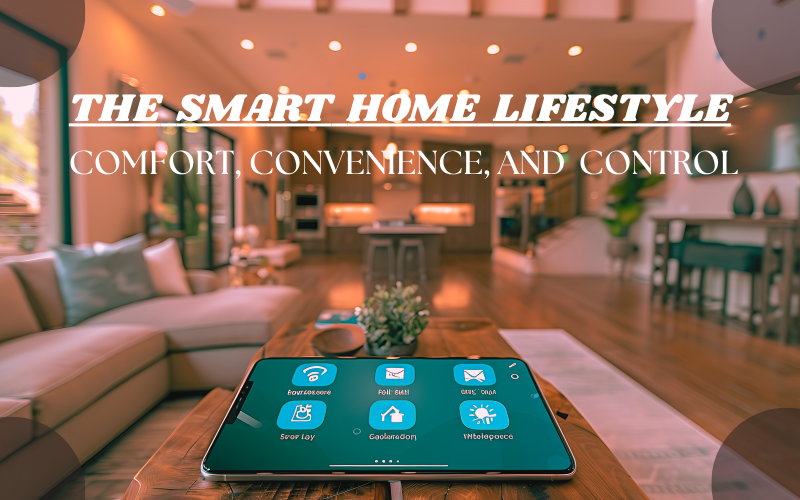
In today’s fast-paced world, our homes are no longer just places to rest — they’re evolving into intelligent ecosystems that anticipate our needs, optimize our routines, and improve our quality of life. Welcome to the era of smart home living, where technology meets lifestyle to bring comfort, convenience, and control right to your fingertips.
From voice-activated lights and automated climate control to security systems you can monitor from anywhere in the world, the modern home is smarter than ever. In 2025, smart home tech isn’t just a luxury — it’s quickly becoming a standard for modern living.
Let’s explore how the smart home lifestyle is transforming everyday life and why millions are making the shift.
- What Is a Smart Home, Really?
A smart home refers to a residence equipped with devices that can be controlled remotely via a smartphone, tablet, or central hub. These devices are connected through the Internet of Things (IoT) — a network that allows them to “talk” to each other, collect data, and automate routines.
Key smart home categories include:
- Smart lighting
- Home security systems
- Voice assistants
- Climate control
- Smart appliances
- Home entertainment systems
These components work together to create an environment that adapts to your lifestyle — whether you’re home or away.
- Comfort: Your Home, Your Way
One of the biggest appeals of smart home living is the level of personal comfort it offers.
Imagine waking up as your smart blinds gradually open, the lights fade in, and your coffee machine starts brewing — all without you lifting a finger. Smart homes allow you to:
- Automate routines: Set schedules for lighting, temperature, and music.
- Create mood-based settings: Activate “Relax Mode” with dimmed lights, soothing music, and ideal temperature.
- Control climate efficiently: Smart thermostats learn your habits and adjust temperature automatically for comfort and energy savings.
No more fumbling for switches or walking into a cold house. With smart devices, your home caters to you.
- Convenience: Everything at Your Fingertips
Smart home technology simplifies daily life in countless ways:
Voice Control and Centralized Management
Assistants like Amazon Alexa, Google Assistant, or Apple Siri let you control your home using voice commands. From adjusting the volume on your TV to locking the front door, you can manage everything without moving a muscle.
Remote Access
Forgot to turn off the lights? Need to check if you locked the door? With remote access apps, you can control your home from anywhere. Whether you’re at work or on vacation, you have full control in your pocket.
Seamless Automation
Set your vacuum to clean when you leave the house, program your sprinklers to water the lawn only when it hasn’t rained, or have groceries ordered when your fridge detects you’re running low on essentials. Automation saves time and reduces mental load.
- Control: Security and Peace of Mind
Smart homes don’t just make life easier — they also make it safer.
Smart Security Systems
Modern smart homes are equipped with:
- Smart doorbells with cameras (like Ring)
- Motion detectors and smart locks
- Window and door sensors
- Real-time mobile alerts
You can see who’s at the door, speak to visitors, monitor indoor and outdoor cameras, and even unlock the door for guests — all from your smartphone.
Parental Controls and Privacy
Smart home systems also give parents peace of mind with features like:
- Restricting screen time on TVs or tablets
- Monitoring children’s rooms through smart baby monitors
- Setting up geofencing alerts when kids arrive home
With smart security, your home is not just protected — it’s actively watching over itself.
- Energy Efficiency: Smart and Sustainable
As energy prices rise and environmental concerns grow, smart homes offer a sustainable solution:
- Smart thermostats reduce unnecessary heating/cooling
- Smart lighting turns off when no one is in the room
- Energy monitors track usage and offer tips to cut consumption
- Solar panel integration with battery storage for optimized power use
By making your home more efficient, you not only reduce your carbon footprint — you also save on monthly utility bills.
- The Smart Kitchen: Where Tech Meets Taste
Kitchens are getting smarter too, with appliances that:
- Suggest recipes based on ingredients in your fridge
- Preheat your oven on your way home
- Alert you when food is about to expire
- Track your grocery list automatically
Smart kitchens make healthy eating and home cooking easier than ever before.
- Challenges to Consider
While smart homes offer many benefits, they’re not without challenges:
- Privacy risks: Connected devices can be vulnerable to cyberattacks.
- Tech dependence: Over-reliance may reduce basic problem-solving in emergencies.
- Cost: Initial setup can be expensive depending on the number of devices.
To overcome these issues, users should:
- Secure networks with strong passwords and updates
- Choose reputable brands with solid security features
- Start small — you can build your smart home gradually
- The Future of Smart Living
As AI and IoT continue to advance, the future of smart homes will include:
- Predictive AI that anticipates your needs
- Robotic assistants that help with chores
- Advanced home health monitoring
- Full integration with smart cities and public infrastructure
The possibilities are endless — and smart home living is just getting started.
Conclusion: A Smarter Way to Live
The smart home lifestyle isn’t just about gadgets — it’s about creating a home that works for you. One that understands your routines, enhances your comfort, secures your peace of mind, and empowers your daily life.
As we move further into the digital age, smart homes will continue to evolve — turning ordinary spaces into intelligent sanctuaries. Whether you’re a tech enthusiast or simply seeking convenience, the smart home lifestyle offers something for everyone.
So, are you ready to live smarter?