
Smart Agriculture: Feeding the Future with Technology
Discover how smart agriculture uses technology to boost efficiency, sustainability, and food production, shaping the future of farming.
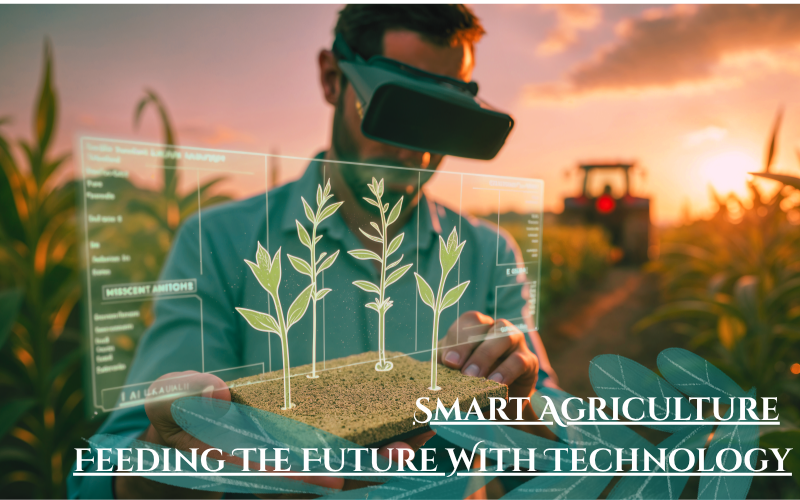
As the global population steadily climbs toward 10 billion by 2050, the question arises: How will we feed everyone without exhausting the planet's resources? Traditional agricultural practices, though reliable in the past, now struggle to keep up with the growing demand for food, water, and arable land. Enter smart agriculture — a technological revolution that is transforming the way we grow, monitor, and harvest crops.
Smart agriculture, also known as precision farming, integrates technology like IoT (Internet of Things), artificial intelligence (AI), robotics, drones, and big data to make farming more efficient, sustainable, and productive. In this blog, we’ll explore how smart agriculture is shaping the future of food production and why it’s crucial for the survival of our planet and its people.
What Is Smart Agriculture?
Smart agriculture is the application of digital technologies to monitor, automate, and improve farming processes. It’s about using real-time data to make more informed decisions, reduce waste, and increase yields — all while conserving resources like water and energy. The key pillars of smart agriculture include:- IoT sensors to collect data on soil, weather, and crop health
- GPS and GIS mapping for precision seeding and fertilization
- AI and machine learning for predictive analytics
- Drones and robots for planting, irrigation, and harvesting
- Cloud computing and mobile apps for farm management
Why the World Needs Smart Farming
- Feeding a Growing Population
- Fighting Climate Change
- Conserving Resources
Technologies Driving Smart Agriculture
- Internet of Things (IoT)
- Artificial Intelligence (AI)
- Drones and Aerial Imaging
- Big Data & Analytics
- Automation & Robotics
Real-World Applications
Precision Farming in India
Indian farmers in states like Punjab and Maharashtra are using mobile apps like Kisan Suvidha and AgriApp to get crop advisories, weather updates, and market prices — helping them make smarter decisions.John Deere’s Smart Tractors
John Deere’s autonomous tractors use GPS and AI to plow fields with pinpoint accuracy, saving fuel and labor while improving crop consistency.Vertical Farms in Urban Areas
Companies like AeroFarms and Plenty are growing vegetables in stacked layers under LED lights using hydroponic systems. These indoor farms use 95% less water and no pesticides.Sustainability Benefits
- Less Water Usage: Smart irrigation can reduce water usage by up to 50%.
- Lower Chemical Use: Targeted pesticide and fertilizer applications reduce runoff and soil damage.
- Soil Health Monitoring: Continuous soil tracking helps maintain nutrient balance and prevent degradation.
- Waste Reduction: Data-driven storage and transport decisions reduce post-harvest loss.
Challenges Ahead
Despite the benefits, smart agriculture faces a few roadblocks:- High initial cost of technology for small-scale farmers
- Lack of digital literacy and training
- Connectivity issues in rural areas
- Data privacy concerns with cloud-based platforms
The Future of Farming Is Digital
Smart agriculture isn’t just a luxury for big farms — it’s becoming a necessity for sustainable global food production. As climate change intensifies and arable land shrinks, technology offers a way to grow more with less. Imagine farms where sensors tell plants when to drink, AI suggests the best planting schedules, and robots take over the heavy lifting — it’s not science fiction, it’s happening now.Conclusion
Smart agriculture holds the key to feeding future generations while protecting the planet. It bridges the gap between traditional farming wisdom and modern innovation. By embracing smart technology, farmers can grow healthier crops, use fewer resources, and ensure a steady food supply for decades to come. In the end, it’s not just about using gadgets — it’s about growing smarter.


Comments
Leave a comment Replying to
Comments are reviewed before they appear. Your email is never published.