
How Vaccines Work: Myths and Facts
Uncover the truth behind vaccines, debunking myths and explaining how they work to protect against diseases and improve public health.
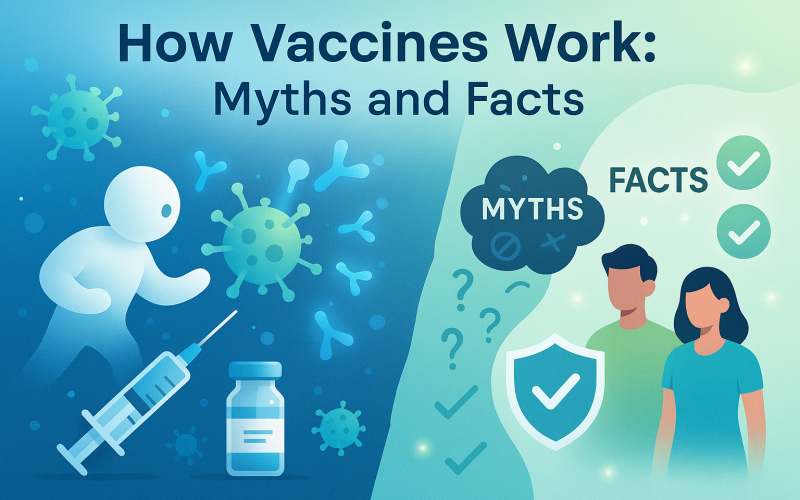
What Are Vaccines?
Vaccines are biological preparations that help your body develop immunity to a specific disease. They work by training your immune system to recognize and fight pathogens (like bacteria or viruses) without causing the illness itself. When you’re exposed to a germ for the first time, your immune system takes time to learn how to fight it. During this time, the germ can make you sick. Vaccines give your immune system a “preview” of the disease-causing organism, so if you’re exposed later, your body can respond faster and more effectively.How Do Vaccines Work?
Here’s how the process works step by step:Introduction of an Antigen
Vaccines contain weakened or inactivated parts of a particular organism (antigen) that triggers an immune response. Some newer vaccines use messenger RNA (mRNA) or viral vectors to teach your body to make a harmless part of the virus (like the spike protein in COVID-19).Immune Response
When the vaccine introduces this antigen, your immune system sees it as an invader and starts producing antibodies to fight it off.Memory Cells
Along with antibodies, your immune system also creates memory cells that remember how to recognize and destroy the pathogen if you encounter it again in the future. This memory is why vaccinated individuals usually don’t get sick or have a much milder illness if exposed to the actual disease.Why Are Vaccines Important?
- They prevent serious illness, disability, and death.
- They protect vulnerable people who cannot be vaccinated, like newborns or immunocompromised individuals, through herd immunity.
- They can eliminate diseases from entire populations, as seen with smallpox.
Common Myths About Vaccines – And the Facts
Myth 1: “Vaccines cause the disease they’re meant to prevent.”
Fact: Most vaccines use weakened or inactivated parts of a pathogen that cannot cause disease in healthy people. For example, the flu shot contains inactivated viruses that cannot make you sick.Myth 2: “Vaccines contain harmful ingredients.”
Fact: Vaccines contain only small amounts of ingredients that help preserve the vaccine or enhance the immune response. These amounts are carefully regulated and proven safe by decades of research.Myth 3: “Natural immunity is better than vaccine-induced immunity.”
Fact: While natural immunity does occur, it often comes at the cost of getting seriously ill or even dying. Vaccines allow you to build immunity without experiencing the full-blown disease and its complications.Myth 4: “Vaccines cause autism.”
Fact: This myth stems from a discredited and fraudulent study from the late 1990s. Numerous large-scale studies have found no link between vaccines and autism.Myth 5: “Once diseases are rare, we don’t need vaccines anymore.”
Fact: Diseases can come back if vaccination rates drop. Measles outbreaks in recent years are a clear example of what happens when communities stop vaccinating.The Science Behind Vaccine Safety
Before being approved, vaccines go through rigorous testing in clinical trials to make sure they are safe and effective. Even after approval, they are constantly monitored for side effects. Most side effects, if any, are mild and temporary, like a sore arm or mild fever. Serious side effects are extremely rare.Herd Immunity: Protecting the Community
Vaccines don’t just protect the person who gets the shot — they protect the entire community. When enough people are vaccinated, it becomes much harder for a disease to spread. This is called herd immunity, and it’s crucial for protecting those who cannot be vaccinated, like babies or people with weakened immune systems.Real-World Impact of Vaccines
Thanks to vaccines:- Smallpox has been eradicated.
- Polio is close to being eliminated worldwide.
- Deaths from measles, diphtheria, and other diseases have dropped dramatically.
Takeaway: Trust the Science
Vaccines are a testament to human ingenuity and scientific progress. They save lives, prevent suffering, and protect communities. While it’s normal to have questions or concerns, it’s essential to base decisions on facts and evidence — not misinformation. If you’re unsure about a vaccine, talk to a healthcare provider you trust. By choosing vaccination, you’re not just protecting yourself — you’re helping to keep your loved ones and your community safe.Key Points to Remember:
- Vaccines train your immune system to fight disease safely.
- They are thoroughly tested and monitored for safety.
- Myths about vaccines causing disease or autism are false.
- Vaccination helps protect the entire community.

Comments
Leave a comment Replying to
Comments are reviewed before they appear. Your email is never published.