
How Soap Really Kills Germs: The Chemistry of Clean
Uncover the science behind how soap kills germs, breaking down dirt and bacteria with chemistry for a cleaner, healthier you.
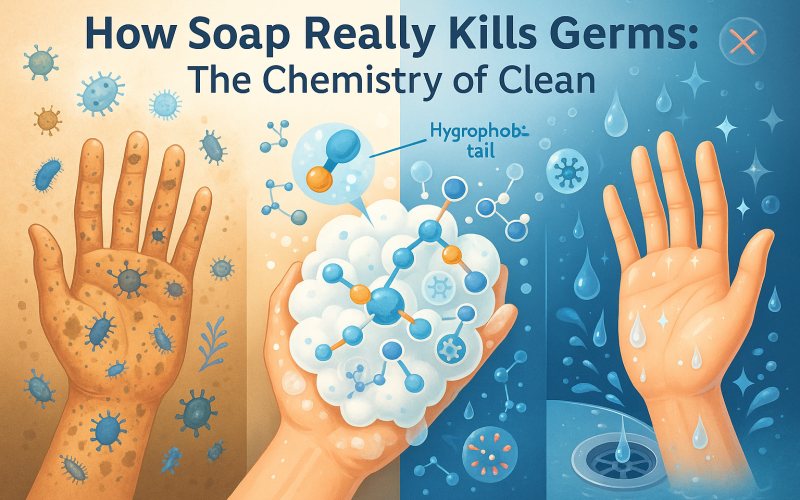
In our daily routines, soap is one of the most powerful weapons we have against illness-causing germs—and yet, many of us don’t fully understand how it works. Sure, it makes your hands feel fresh and clean, but how exactly does it eliminate bacteria and viruses? Why is washing with soap and water better than using just water? What makes soap different from hand sanitizers? So how does soap really kills germs?
Welcome to the surprisingly fascinating world of soap chemistry—where molecules fight germs in a microscopic battle every time you wash your hands.
In summary:
What Exactly Is Soap?
At its core, soap is a chemical compound made by combining fat or oil with an alkaline substance—usually sodium hydroxide (lye). This process is called saponification. Every soap molecule has two distinct parts:- Hydrophilic head (water-loving)
- Hydrophobic tail (water-fearing or fat-loving)
Why Germs Stick to You in the First Place
Most harmful microbes like bacteria, viruses, and fungi don’t just sit loosely on your hands. They stick to the natural oils and sebum that your skin produces. Dirt, grime, and microbial cells cling to this oily layer, making it hard to wash off with water alone. Since oil and water don’t mix, simply rinsing your hands under a tap won’t remove most germs. That’s where soap becomes essential.How Soap Kills Germs: The Science in Action
When you lather up with soap and water, here’s what happens at the molecular level:- Breaking Down the Grease
- Surrounding the Germs
- Disrupting Virus Membranes
- Rinsing It All Away
Does Soap Actually Kill Germs?
Technically, soap doesn’t "kill" all germs in the traditional sense—especially not bacteria. What it does is lift them off the skin and disrupt their environment, making them easier to wash away. In the case of enveloped viruses, soap does kill or inactivate them by breaking apart their membranes. For non-enveloped viruses and hardy bacteria, soap still helps remove them physically, even if it doesn’t destroy them chemically.Soap vs Hand Sanitizer: Which Is Better?
Hand sanitizers—especially those with 60% or more alcohol—are effective at killing many types of germs. However, they don’t work well on dirty or greasy hands, and they don’t remove harmful substances from the skin the way soap does. Here’s a quick comparison:| Feature | Soap & Water | Hand Sanitizer |
| Removes dirt and oil | Yes | No |
| Kills enveloped viruses | Yes | Yes |
| Kills non-enveloped viruses | Not always | Sometimes |
| Effective on visibly dirty hands | Yes | No |
| Requires water | Yes | No |
- Use soap and water whenever possible, especially after using the restroom, handling food, or coming in from outside.
- Use hand sanitizer when soap and water are unavailable—like when you're traveling or shopping.
Why You Need to Wash for 20 Seconds
Experts recommend scrubbing your hands with soap for at least 20 seconds. Why? Because it takes time for the soap to:- Work its way into oils and dirt
- Break down germ membranes
- Form micelles
- Let you scrub every part of your hands (palms, nails, fingers, thumbs, wrists)
The Unsung Hero of Public Health
Soap is one of the greatest inventions in human history. It has saved more lives than most medicines by helping prevent infections, reduce disease spread, and promote overall hygiene. In fact, widespread handwashing with soap has been linked to:- 50% reduction in diarrhea-related illnesses
- 20% lower risk of respiratory infections
- Significant drops in child mortality rates in low-income regions
Final Thoughts
Soap might seem simple, but behind every bubbly lather is complex chemistry working hard to keep you safe. From breaking down dirt to destroying virus membranes, soap is a true hero in personal hygiene and public health. So the next time you reach for that bar or pump dispenser, remember—you’re not just cleaning your hands. You’re conducting a mini science experiment that keeps you (and those around you) healthy. Lather up, scrub well, and rinse like a scientist.

Comments
Leave a comment Replying to
Comments are reviewed before they appear. Your email is never published.