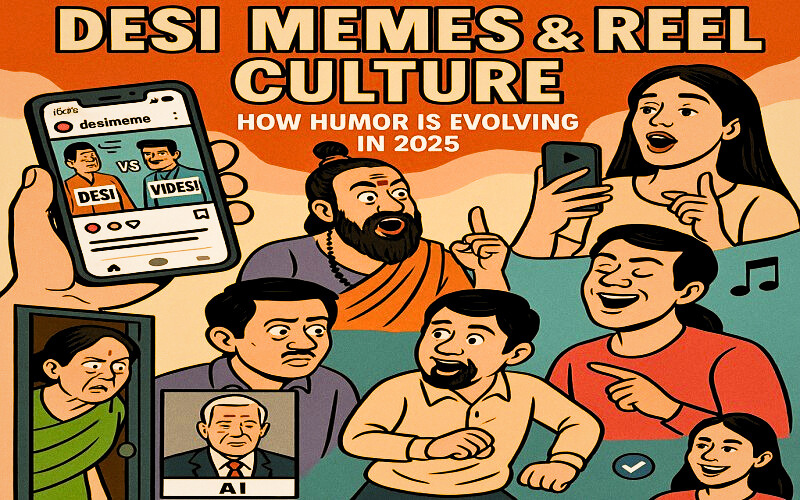
India has always had a rich tradition of humor—be it in the form of age-old folk tales, sharp-witted political cartoons, stand-up performances, or Bollywood comedies. But with the rise of Desi Memes & Reel Culture on social media, especially on short-form platforms like Instagram Reels and YouTube Shorts, humor has shifted from a passive, scripted experience to an interactive, participatory phenomenon.
In 2025, Desi humor is thriving more than ever, evolving through memes, reels, and viral trends that resonate with a generation raised on the internet. This cultural shift is more than just funny videos—it reflects how India thinks, feels, and responds to the world around it.
- From WhatsApp Jokes to Hyperlocal Memes
Back in the early 2010s, WhatsApp forwards were the epitome of digital humor in India—dad jokes, stale puns, and cartoon sketches that circulated endlessly. Fast forward to 2025, and humor is now smarter, quicker, and deeply rooted in local context.
Today’s desi memes are hyperlocal: they speak the language of the region, reflect community quirks, and often respond to immediate social, political, or entertainment developments. A meme featuring a Tamil movie punch dialogue might go viral in Chennai, while a Bhojpuri spoof reel might trend in Patna. Language is no longer a barrier—regional pride and cultural relatability are the main drivers.
- Instagram Reels: India’s New Comedy Stage
Instagram Reels has become India’s biggest open-mic stage. From parody artists to mimicry experts, everyone has a chance to go viral. The appeal? Reels are short, snackable, and driven by audio trends, making them perfect for India’s fast-scrolling, dopamine-seeking audience.
Some of the most viral desi humor trends of 2025 include:
- "Desi vs Videsi" skits where creators contrast Indian habits with Western norms in hilariously exaggerated ways.
- "Middle-class problems" reels that portray the everyday struggles of Indian households—power cuts, nosy aunties, overprotective parents.
- Lip-syncing to old Bollywood dialogues—reviving nostalgia with a comedic twist.
Creators like Yashraj Mukhate walked so this generation of meme musicians and reel comics could run. Now, hundreds of creators remix popular sounds, add regional punchlines, and share them within minutes.
- Humor as Social Commentary
Desi memes and reels are no longer just about laughter—they’re a mirror to society. In 2025, many creators use humor as a vehicle to discuss serious issues: politics, unemployment, climate change, feminism, and more.
Consider:
- Satirical pages like “Andheri West Shitposting” use absurdity to critique film industry culture.
- Meme trends like “Rizz Baba” (a spiritual guide giving outdated love advice) subtly call out patriarchal dating norms.
- Skits showing generational clashes highlight gaps in values between Gen Z and their parents, using comedy to bridge understanding.
Through irony, parody, and self-deprecation, humor allows Indians to digest hard truths and even initiate conversations that might otherwise be too sensitive.
- The Rise of the Regional Meme Lords
While metro cities like Mumbai and Delhi dominated meme culture a few years ago, 2025 has seen a massive boom in regional meme pages and creators. Thanks to increased smartphone penetration and regional language support, creators from Tier 2 and Tier 3 cities are leading viral trends.
Some examples include:
- Punjabi meme pages mixing Bhangra beats with absurd captions.
- Kannada reels recreating village life with comic exaggeration.
- Assamese and Bengali memes gaining national traction through cross-cultural humor.
This decentralization of humor has democratized comedy. Now, a creator from Indore or Kochi can be just as viral (and profitable) as someone in Bandra.
- Nostalgia-Driven Comedy
2025 humor is heavily nostalgic. Millennials and Gen Z are recycling their childhood memories—TV shows, old Bollywood songs, cricket references, and school experiences—into meme content that strikes a universal chord.
Some recurring themes:
- “90s kids vs 2000s kids” memes.
- Doordarshan-style filter edits on reels.
- Comic reenactments of CBSE school experiences—morning assembly, PT class, or tiffin politics.
This kind of content does two things at once: it triggers emotional recall and generates laughs, creating a deeply personal engagement with the audience.
- AI-Generated Humor: The New Meme Frontier
Yes, artificial intelligence has officially entered meme culture. In 2025, tools like AI voice cloning, meme generation bots, and text-to-video tools have made humor production faster and more surreal than ever.
Imagine:
- A reel where Chandrayaan-4 "gives an interview" in SRK’s voice.
- A meme where AI generates conversations between politicians in Gen Z slang.
- AI that creates custom memes based on trending topics in your city, in your dialect.
These tools allow even non-technical users to produce professional-looking comedic content within minutes, pushing the limits of imagination and absurdity.
- The New Age Meme Stars & Reel Influencers
With the evolving culture, a new genre of celebrities has emerged: meme influencers. These are not just random pages posting jokes, but verified creators with distinct identities and loyal followers.
Some popular categories:
- Mimicry masters who imitate celebs and politicians with uncanny accuracy.
- “Desi Karen” characters parodying nosy neighbors or moral-policing aunties.
- Rant comedians who merge stand-up comedy with meme-style delivery.
Brands have jumped in too, collaborating with meme pages and creators for campaigns. It’s not uncommon for an FMCG brand to launch a product with a meme first, then an ad later.
- Cancel Culture, Trolling, and the Dark Side of Meme Humor
While humor is evolving positively, it's not without complications. Meme and reel culture in India has also given rise to trolling, offensive content, and cancel culture.
Concerns include:
- Caste and religious insensitivity disguised as “dark humor.”
- Mocking accents or regional dialects, leading to online backlash.
- Meme pages weaponizing humor to spread political propaganda.
In 2025, there’s a growing conversation around responsible comedy—encouraging creators to be funny without being harmful. Some creators now include disclaimers, or consciously choose satire over insult.
- Monetizing Laughter: A Career Path
Five years ago, telling your parents you want to “make memes for a living” would result in silence—or worse, a tuition refund. Today, it’s a viable profession.
Meme pages with large followings monetize via:
- Brand partnerships and sponsored posts.
- Affiliate marketing through funny product reels.
- Paid shoutouts and page promotions.
Reel stars get invited to OTT events, appear in music videos, and are even cast in web series. In essence, humor has become a launchpad for multiple careers—in content creation, acting, voiceover, digital marketing, and even politics.
- The Psychology of Desi Meme Culture
Why do Indians love meme and reel humor so much?
A few psychological reasons:
- Relatability: Memes reflect daily experiences, validating our emotions with a laugh.
- Stress relief: Humor offers a release in a country often grappling with high academic pressure, political noise, and traffic jams.
- Identity building: Sharing a meme is a cultural statement—"This is my vibe," "My people will get this."
In 2025, meme pages are not just entertainment—they’re communities, therapy sessions, even forms of protest.
- Humor Beyond Borders: The Global Desi Meme
Indian humor is also making waves abroad. NRIs and second-gen diaspora communities in the US, UK, and the Middle East are creating and sharing memes that blend desi culture with global living.
Examples include:
- “Desi Dad in America” skits that contrast Western freedom with desi discipline.
- Meme pages like “Brown Girl Problems” or “Desi Therapy” with international desi followers.
- Fusion reels where creators dance to bhangra while wearing crocs in a snowstorm.
This cross-cultural humor builds bridges, showing that desi jokes can go global without losing their roots.
Conclusion: The Future of Funny
In 2025, Desi meme and reel culture is more than just a trend—it’s a revolution in how Indians engage with humor, identity, and community. What began as WhatsApp forwards has transformed into a digital movement that spans languages, geographies, and ideologies.
As we scroll, share, remix, and laugh, we’re not just passing time—we’re shaping the new language of Indian storytelling. In a country of over a billion voices, humor is the one thing that brings us together, one meme at a time.


Comments
Leave a comment Replying to
Comments are reviewed before they appear. Your email is never published.