
The Hinokami Chronicles 2: How to Get Good at Demon Slayer (Beginner Tips)
Master guard, combos, and assists in Demon Slayer: The Hinokami Chronicles 2 with these beginner tips for faster wins.
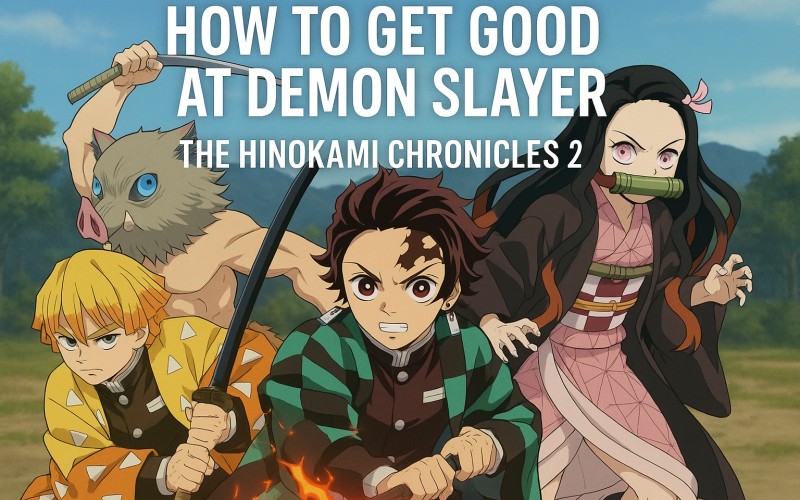
If you’re opening Demon Slayer: The Hinokami Chronicles 2 for the first time and wondering how to stop getting sliced, this guide will get you competent fast—covering core mechanics, easy combos, character picks, survival/ranked tips, and drills that actually make you better. I’ve pulled in lessons from official info, early guides, and community wisdom, and then leveled them up into one practical playbook.
What’s actually new (and why it matters)
-
A broader VS roster and modernized systems mean more team synergies and counterplay. If you played the first game, expect a faster meta with stronger pressure tools and assists. Translation: defense and meter discipline matter even more now.
Bottom line: you’ll climb quicker by mastering guard mechanics, meter usage (Boost/Surge & Skill Gauge), and simple but consistent team routes—before you chase long combo videos.
Step 1 — Set yourself up to win (settings & prep)
-
Do the Tutorials & Training Paths to unlock system prompts and basic muscle memory. Use the in-game Training to grind confirms and DI (directional influence) escapes.
-
Pick two comfort characters (one main, one pocket) so you learn matchups without swapping constantly. Early tier talk favors pressure monsters—great for beginners because they convert more stray hits.
-
Latency check: if online, keep Wi-Fi clean and avoid downloading in the background; this game rewards reactions (parries/push blocks).
Step 2 — Learn the three pillars of defense
Guard. Push Block. Parry. Most new players only hold guard; don’t be that slayer.
-
Guard: blocks strings but loses to throws and gets chipped by pressure.
-
Push Block (guard + direction): creates space and resets turns—vital versus rushdown.
-
Parry (tap guard on contact): high-risk, high-reward; lab against common blockstrings.
Multiple beginner guides for HC2 stress exactly this trio. Practice them first; your win rate spikes.
Drill: Set the dummy to run a basic blockstring; rotate guard → push block → parry on a 10-minute timer. Track success rate.
Step 3 — Meter 101: Boost/Surge & Skill Gauge
-
Skill Gauge powers specials and extensions; don’t blow it all on unsafe pressure. Spend it to confirm hits and make unsafe moves safe.
-
Boost/Surge: Treat Boost as momentum insurance and Surge as your checkmate window—activate when you’ve cornered them or to snatch tempo back on defense. Guides consistently point to smart meter pacing as the separator between beginners and climbers.
Rule of thumb: keep ~1 bar available to escape disaster or extend a sure hit; Surge when a round is winnable now, not later.
Step 4 — Assists: the secret sauce
This is a team fighter at heart. Assists do four huge things:
-
Cover approaches so you can dash in safely.
-
Extend combos after launchers or air hits.
-
Flip turns on defense (call assist during block to interrupt gaps).
-
Set strike/throw: call assist, dash up, then throw if they keep guarding.
Community tier chatter and character write-ups highlight pairings with easy extensions and pressure—lean on those while you learn.
Step 5 — Day-1 character picks (beginner-friendly)
Pick characters who give you payoff without labbing for hours:
-
Rengoku — straightforward buttons, big damage, constant threat. Great for survival grinding too.
-
Tanjiro (core variants) — well-rounded kit, honest fundamentals; tons of community guidance already.
-
Entertainment District Tanjiro / Tengen / Gyomei — strong pressure/resets mentioned in early tier lists; easy to feel powerful while you learn spacing.
Note: Tier lists are still shaking out post-launch. Use them as a compass, not a creed.
Step 6 — Five plug-and-play combos (usable on day one)
(Exact notation varies by platform; think Light = L, Heavy = H, Skill = S; dash-cancel where allowed.)
-
Ground starter: L L → S → dash → L L → ender (S or throw).
-
Anti-air confirm: jump L → land → L → S → assist → L L → ender.
-
Corner carry: L L → S (launcher) → jump L L → land → S → ender.
-
Assist sandwich: call assist → dash L → throw (if they keep guarding) or L L → simple string.
-
Surge conversion: pop Surge on a clean hit → L L → S → assist → L L → ultimate (if available).
These mirror the structure taught in early combo tutorials and creator guides—short, reliable, meter-aware. Expand later into character-specific routes.
Step 7 — Neutral shortcuts (how to actually get hits)
-
Threaten throw after blocked L L; once they tech late or jump, swap to frame-trap with L → delay L.
-
Dash guard into assist call to test their reactions safely.
-
Jump less than you think; walk/dash block is king until you’ve scouted anti-airs from the opponent.
These “beginner neutral” habits are echoed in coaching-style videos and are easy to adopt.
Survival Mode & S-Ranks: smart grinding
-
Survival 100 wins: players report success with Rengoku + Nezuko (bread variant): throw → a couple of quick lights afterward to stabilize momentum and avoid risky over-extensions. Simple and effective.
-
Story S-Ranks: minimize damage taken, convert guaranteed punishes, and don’t drop enders—point scoring clearly favors clean defense. Do a “no-hit” mindset for boss patterns.
Ranked mindset (without burning out)
-
Two-set rule: if you lose two sets in a row to the same player, lab what beat you, then queue again.
-
Record & review one match per session—find one habit to fix (e.g., roll on wakeup every time).
-
Goal > grind: “land one parry punish” or “no panic Surges” beats “play 30 games” for improvement.
Early community tier debates show many characters are viable—so improving decisions outpaces chasing “the perfect main.”
30-minute practice plan (actually doable)
-
10 min: defense reps (guard → push block → parry).
-
10 min: your two BnBs from raw hit and from assist starter.
-
5 min: throw/strike mix with assist call.
-
5 min: one matchup situation you keep losing (e.g., anti-air punish).
Do this before hopping into ranked; you’ll feel sharper immediately. This aligns with the structure recommended by multiple beginner guides/creators, condensed into a single routine.
Quick FAQs
Q: Which edition did I buy and what’s included?
Check the official SEGA page for edition bonuses (character unlock keys, attire, early access details) and platform info. SEGA亞洲官方網站| SEGA
Q: When did the game launch on PC/console?
Global release hit early August 2025 (Steam lists August 5, 2025). If you’re reading close to launch, expect meta shifts. Steam Store
Q: Who’s “top tier” right now?
Lists change weekly, but early rankings consistently praise aggressive, reset-heavy picks (e.g., Rengoku, Entertainment District Tanjiro, Tengen/Gyomei). Don’t over-optimize—learn a stable team first.
Sources I drew from (and what I improved)
-
Official information: release/platforms/editions (SEGA site; Steam page). I used these for accuracy on availability & terminology.
-
Beginner mechanics guides: multiple articles/videos emphasize defense tools and meter discipline; I consolidated them into a structured learning path with drills and day-1 combos.
-
Community/meta: early tier lists, character primers, and forum tips informed the “start here” character picks and survival/story advice. I filtered out overly niche tech and focused on consistent, low-execution wins.
Conclusion
Master guard/push-block/parry, spend meter with purpose, and build a two-character shell that gives you safe entries and simple extensions. Run the 30-minute practice, then hop into ranked with one improvement goal per session. You’ll feel the climb.
and hey, make to sure to also check my blog on, top 10 open-world games.



Comments
Leave a comment Replying to
Comments are reviewed before they appear. Your email is never published.