

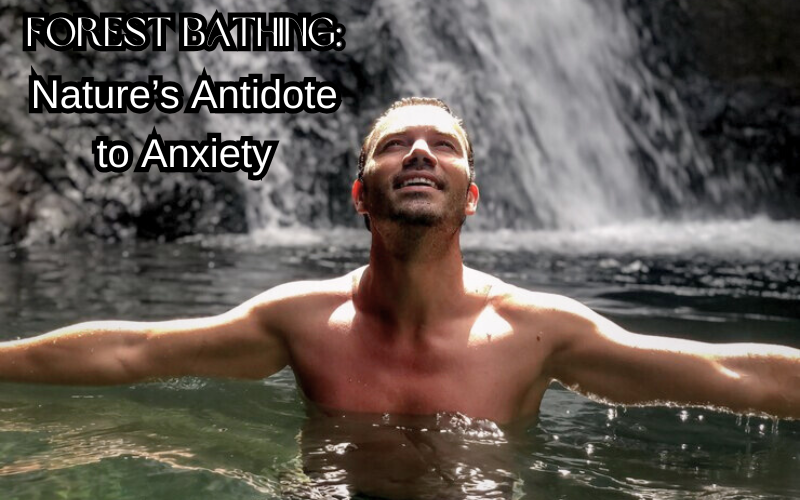
In the age of relentless screen time, digital noise, and concrete jungles, stress and anxiety have become part of our everyday lives. Many seek solace in meditation, therapy, or exercise, but there’s another powerful, often overlooked remedy: forest bathing. Originating in Japan as Shinrin-yoku, forest bathing is the art of immersing oneself in the sights, sounds, and smells of the forest. It’s not about hiking or exercising—it’s about simply being in nature.
This blog explores the science, history, and practice of forest bathing and how it serves as a gentle yet effective antidote to modern-day anxiety.
What Is Forest Bathing?
Forest bathing doesn’t involve swimming or bathtubs. It means taking in the forest atmosphere with all your senses. It’s a mindful walk in the woods, a quiet sit by a tree, or listening to rustling leaves and birdsong.
Origins in Japan
- Shinrin-yoku was developed in the 1980s by the Japanese Ministry of Agriculture, Forestry, and Fisheries.
- It was introduced as a form of preventative healthcare after studies showed nature’s effect on reducing stress hormones.
- Today, forest bathing is a core component of Japan’s national health program.
The Key Principle
Forest bathing is not about hiking for fitness or reaching a destination. It’s about slowing down, sensing, and reconnecting.
The Science Behind Forest Bathing
Research across the globe validates what our ancestors instinctively knew: nature heals.
Reduces Cortisol (Stress Hormone)
- Multiple studies show a 12–15% drop in cortisol after just 20 minutes in a forest setting.
- Walking in urban environments, by contrast, often keeps cortisol levels elevated.
Lowers Heart Rate and Blood Pressure
- Forest bathing helps shift the body into the parasympathetic (rest-and-digest) state.
- A 2011 Japanese study showed reduced pulse rates and lower blood pressure among participants in forest therapy.
Improves Mood and Reduces Anxiety
- Nature immersion decreases symptoms of anxiety, depression, and rumination.
- Forest bathing boosts serotonin and dopamine—neurotransmitters that regulate mood and emotion.
Boosts Immune Function
- Trees emit phytoncides, antimicrobial compounds that help plants defend against disease.
- When inhaled, these phytoncides increase the activity of human natural killer (NK) cells, which play a role in cancer prevention.
Enhances Cognitive Function
- Forest walks improve working memory, creativity, and mental clarity.
- Studies from Stanford and Harvard indicate even short nature exposure improves attention and reduces mental fatigue.
Why Forest Bathing Works for Anxiety
Anxiety thrives in environments of overstimulation, unpredictability, and isolation. Forest bathing counters all three:
Sensory Harmony
Nature stimulates all five senses in a calming way—rustling leaves, earthy smells, dappled sunlight, birdsong—grounding the nervous system.
Digital Detox
Time in the forest offers a break from screens, notifications, and information overload, which often worsen anxiety.
Mindfulness Without Effort
Unlike formal meditation, forest bathing naturally induces a meditative state. Being in nature encourages present-moment awareness effortlessly.
Connection to Something Bigger
Being surrounded by towering trees and age-old ecosystems provides a sense of belonging, reducing feelings of isolation and existential stress.
How to Practice Forest Bathing: A Step-by-Step Guide
You don’t need a guidebook or equipment—just a willingness to slow down and tune in.
1. Schedule Time (30–120 minutes)
Choose a forest, park, or green space where you can spend uninterrupted time. Aim for 1–2 hours if possible.
2. Turn Off Devices
Leave phones in airplane mode or turned off completely. The goal is to disconnect digitally and connect with your surroundings.
3. Move Slowly
Walk without a destination or time goal. Meander. Pause. Sit if you feel like it. There’s no rush.
4. Engage All Senses
- Sight: Notice textures of bark, light patterns, or movement.
- Sound: Focus on the wind, birds, or rustling leaves.
- Smell: Inhale the scent of pine, earth, or flowers.
- Touch: Place your hands on a tree trunk, touch moss, feel cool stones.
- Taste: If safe, sip spring water or eat edible wild berries.
5. Stay Silent
Avoid conversations. Silence deepens awareness and makes room for reflection and calm.
6. Journal or Reflect
After the session, jot down how you felt or what you noticed. Patterns of stress relief often emerge over repeated sessions.
Forest Bathing in Urban Spaces
You don’t need access to a national forest to experience the benefits. Urban dwellers can modify the practice:
- Visit a botanical garden, large city park, or riverside trail.
- Try rooftop gardens or green campuses.
- Even 15 minutes around trees or plants has measurable mental health benefits.
- Use noise-canceling headphones to reduce urban distractions.
Global Spread and Recognition
Forest bathing has gained momentum outside Japan:
🇰🇷 South Korea
Incorporated forest therapy into public health initiatives. Forest Healing Centers offer guided experiences.
🇺🇸 United States
Organizations like the Association of Nature and Forest Therapy (ANFT) train certified forest therapy guides.
🇬🇧 United Kingdom
The National Health Service (NHS) recommends “green prescriptions,” including nature walks for anxiety and depression.
🇮🇳 India
Urban forest initiatives and eco-tourism projects are popularizing forest bathing in places like Kerala, Himachal Pradesh, and Karnataka.
Personal Stories: Transformations in the Trees
Sarah, 32, Graphic Designer (USA)
Burned out from remote work and social isolation, Sarah began forest bathing every Sunday. “I don’t do anything fancy—just walk in silence. Within weeks, I was sleeping better, worrying less, and feeling grounded.”
Ravi, 45, Banker (India)
After suffering a panic attack, Ravi began visiting Cubbon Park in Bengaluru weekly. “Sitting under trees calmed me in a way no medication ever could. It’s now my weekly ritual.”
Emma, 26, Student (UK)
Emma started forest bathing during exam season. “I was skeptical, but walking in the woods helped more than caffeine. It felt like nature was hugging my brain.”
Complementary Practices
Forest bathing pairs well with other wellness approaches:
- Mindfulness meditation: Try guided audio tracks while forest bathing.
- Breathwork: Practice deep breathing with the natural rhythm of your surroundings.
- Yoga in nature: Forest yoga combines body movement with grounding energy.
- Art journaling or photography: Capture moments to enhance presence and creativity.
Precautions and Tips
- Avoid poisonous plants and be mindful of wildlife.
- Wear appropriate shoes and clothing.
- Stay on marked trails if you’re unfamiliar with the area.
- Check weather conditions in advance.
- Don’t expect instant miracles; cumulative exposure matters.
The Future of Forest Therapy
As mental health crises rise globally, forest bathing is gaining traction as a cost-effective, accessible, and scientifically supported solution. Healthcare providers, schools, and corporations are exploring nature-based therapy to reduce burnout and enhance resilience.
In the future, we may see:
- Forest therapy parks in every city
- Virtual forest experiences for the elderly or mobility-impaired
- Insurance-covered nature prescriptions
- Corporate forest retreats to boost employee well-being
Conclusion: Let the Forest Heal You
In our overconnected yet emotionally distant world, the forest offers something rare—presence, peace, and perspective. Forest bathing isn’t just about trees; it’s about returning to our roots. It’s a reminder that the answers we seek—calm, clarity, connection—are not always found in apps or algorithms but in the rustle of leaves, the scent of pine, and the stillness between birdcalls.
So, the next time anxiety tightens its grip, step outside. Let the forest hold you. Breathe with the trees. Listen to the silence. And rediscover the healing power of just being.
“The forest is not a place to escape life, but a place where life begins again.”