


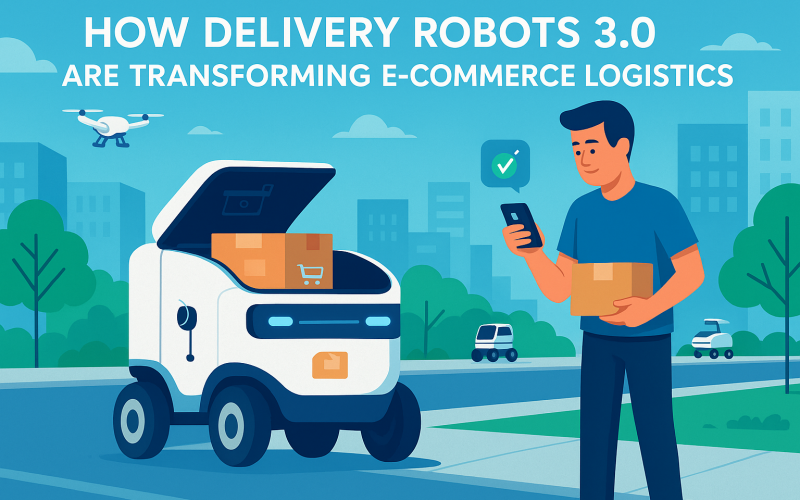
In the age of rapid digital transformation, e-commerce has grown beyond simple online shopping into a complex, high-speed ecosystem. At the center of this evolution stands a new class of autonomous machines—Delivery Robots 3.0. These aren’t just machines on wheels; they represent the future of last-mile delivery—powered by AI, guided by real-time data, and engineered for adaptability.
But what makes these “3.0” robots so revolutionary? In this blog, we explore how these cutting-edge robots are transforming e-commerce logistics, redefining efficiency, sustainability, and customer experience in the process.
What Are Delivery Robots 3.0?
The term “3.0 robots” refers to the third generation of robotics: intelligent, autonomous systems with advanced decision-making abilities, real-time communication, and the capability to operate in dynamic environments with minimal human intervention.
In the context of e-commerce, Delivery Robots 3.0 are:
- Autonomous mobile robots (AMRs) or drones
- Equipped with AI and machine learning for path optimization
- Powered by edge computing for real-time decision-making
- Integrated with IoT and GPS for live tracking and coordination
- Designed with human-aware navigation for urban and semi-urban environments
They’re not just replacing delivery personnel; they’re redefining what last-mile logistics can be.
The Last-Mile Challenge: Why 3.0 Robots Matter
The “last mile” of delivery—the final leg of transporting a package from a warehouse or hub to the customer’s doorstep—is often the most expensive and inefficient part of the supply chain. It involves unpredictable routes, traffic congestion, failed deliveries, and rising labor costs.
Here’s how Delivery Robots 3.0 are tackling these problems:
- Autonomous Navigation in Real-Time
These robots use a mix of LiDAR, cameras, ultrasonic sensors, and AI algorithms to navigate sidewalks, crosswalks, and pedestrian areas. Unlike earlier robots, they can handle unexpected obstacles—like roadblocks, people, or pets—by rerouting themselves on the go.
- 24/7 Operation
Robots don’t need breaks or shifts. They can work overnight or during holidays, reducing delivery backlogs and enabling same-day or even same-hour delivery options.
- Cost Reduction
Without the need for drivers, salaries, or fuel (most are electric), delivery robots significantly reduce operational costs over time—especially at scale.
- Eco-Friendly Logistics
3.0 delivery robots are usually battery-operated and low-emission, contributing to greener cities and helping companies meet their sustainability goals.
Use Cases in the E-commerce Ecosystem
The impact of Delivery Robots 3.0 spans across multiple logistics scenarios:
Local Delivery
E-commerce companies use sidewalk robots to deliver small parcels in urban neighborhoods. These robots can access areas where traditional delivery vans struggle, such as gated communities or campuses.
Food & Grocery Delivery
Companies like Starship Technologies, Nuro, and Kiwibot have deployed food and grocery delivery robots in U.S. college towns and European cities. These robots maintain temperature-controlled compartments to ensure freshness and hygiene.
Medical & Pharmaceutical Delivery
3.0 robots are also used to transport essential items like medicines, lab samples, and even emergency equipment between hospitals and labs with speed and security.
Smart Warehousing to Doorstep
Some robots are integrated into smart warehouses and can autonomously pick, pack, and deliver orders with minimal human input. This end-to-end automation ensures faster processing and fewer errors.
Technology Behind Delivery Robots 3.0
What powers this robotic revolution? Several key technologies work in harmony:
- Artificial Intelligence: Helps robots make contextual decisions—like whether to wait or reroute if a street is blocked.
- Edge Computing: Processes data locally on the robot to reduce latency in navigation and communication.
- GPS + 5G: Enables real-time location tracking and faster cloud syncing.
- Cloud Integration: Connects each robot to a central control system for coordination, fleet management, and route optimization.
- Computer Vision: Helps identify objects, read traffic signs, and recognize delivery drop-off points.
Customer Experience: A New Era
The introduction of Delivery Robots 3.0 is reshaping how customers interact with logistics:
- Live Tracking: Customers can follow the robot’s journey in real time via mobile apps.
- Contactless Delivery: With safety becoming a priority, robots offer secure, no-contact drop-offs.
- Personalized Delivery Windows: Customers can schedule exact delivery times, and some robots even return for pick-ups or returns.
- Interactive Interfaces: Many robots have touchscreen panels or voice systems for secure identification and delivery confirmation.
Safety, Regulation & Public Acceptance
Despite the tech advancements, challenges remain:
- Regulatory Hurdles: City laws around sidewalk use, pedestrian right-of-way, and insurance are still evolving.
- Security: Robots must be protected against vandalism, hacking, or theft. Companies employ cameras, GPS tracking, and tamper-proof containers.
- Public Trust: Widespread adoption will depend on how safe and reliable people perceive these machines to be.
Global Adoption Trends
Several countries are already rolling out Delivery Robots 3.0 at scale:
- United States: Companies like Amazon, FedEx, and Starship are piloting autonomous delivery in urban areas.
- China: JD.com and Meituan have developed fleets of delivery bots operating across tech-savvy cities.
- Europe: Estonia, the UK, and Germany are experimenting with sidewalk bots and aerial drones for deliveries.
India is also exploring autonomous delivery in gated communities, industrial parks, and controlled campuses, thanks to startups and collaborations in the space.
The Road Ahead
Delivery Robots 3.0 aren’t just a futuristic novelty—they’re a practical, scalable solution to some of the most persistent pain points in e-commerce logistics. As technology matures and cities adapt their infrastructure, these robots are likely to become a mainstay in urban mobility and delivery services.
For businesses, the integration of such technology is a competitive advantage. For consumers, it represents faster, greener, and more personalized service. For the logistics industry, it’s a glimpse into a more efficient, automated future.