


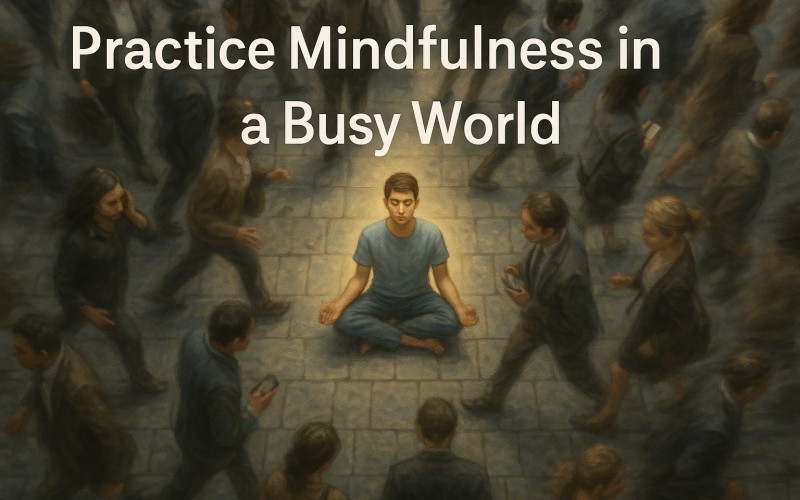
In today’s fast-paced, hyper-connected world, where deadlines, notifications, and responsibilities constantly pull us in multiple directions, mindfulness offers a grounding solution. But many people think practicing mindfulness requires hours of silent meditation, yoga retreats, or a monk-like lifestyle. In reality, mindfulness can be practiced anywhere, at any time—even in the middle of a hectic schedule. Let’s explore what mindfulness truly is, how to practice mindfulness, why it’s essential, and most importantly, how you can integrate it into your everyday life without hitting pause on your responsibilities.
What Is Mindfulness?
Mindfulness is the practice of being fully present and aware in the current moment, without judgment. It means noticing your thoughts, feelings, surroundings, and bodily sensations with openness and clarity.
It isn’t about emptying your mind or avoiding stress. Instead, it’s about changing your relationship with your thoughts—becoming an observer, not a victim of your mental chatter.
Why Mindfulness Matters in a Hectic World
In a world that never stops moving, mindfulness acts like a mental reset button. Its benefits are backed by science:
- Reduces stress and anxiety
- Improves concentration and memory
- Boosts emotional regulation
- Strengthens immune system
- Promotes better sleep and decision-making
Whether you’re a student juggling exams and part-time jobs, a professional caught between deadlines, or a parent navigating chaos, mindfulness helps bring balance and clarity.
7 Easy Ways to Practice Mindfulness Daily
You don’t need hours to benefit from mindfulness. Here are seven practical, time-efficient ways to bring mindfulness into your everyday routine:
- Start Your Day with Intention (2 Minutes)
Instead of reaching for your phone the moment you wake up, sit up in bed, take a deep breath, and ask yourself:
“What kind of day do I want to create today?”
Take 2 minutes to focus on your breathing. This sets the tone for a calmer, more intentional day ahead.
- Mindful Breathing Anywhere, Anytime
Your breath is the most powerful mindfulness tool—and it’s always available. Try this quick technique:
- Inhale slowly for 4 seconds
- Hold your breath for 4 seconds
- Exhale slowly for 4 seconds
- Hold again for 4 seconds
This “Box Breathing” method instantly calms your nervous system. Practice it during traffic jams, before meetings, or even while waiting in line.
- Single-Task, Don’t Multi-Task
Multi-tasking divides your attention and increases mental fatigue. Instead, do one thing at a time—fully.
Whether you’re eating, writing an email, or talking to a friend, focus solely on that task. You’ll perform better and enjoy it more.
- Use Technology… Mindfully
Your phone doesn’t have to be your enemy. Use it to support mindfulness:
- Set reminder alarms labeled “Breathe” or “Be Present”
- Use apps like Headspace, Calm, or Insight Timer
- Turn off non-essential notifications during work hours
Even social media can become mindful if used with intention—by following uplifting creators or limiting doom-scrolling time.
- Practice Gratitude Journaling (5 Minutes at Night)
Before bed, jot down 3 things you’re grateful for. They don’t have to be big—a warm cup of tea, a good conversation, a funny meme.
Gratitude shifts your focus from what’s lacking to what’s abundant, naturally reducing stress and increasing happiness.
- Mindful Eating
How often do you eat while watching TV or scrolling your phone? Instead, try this:
- Look at your food—notice colors, textures, and smells
- Take slow bites and chew thoroughly
- Pay attention to how your body feels as you eat
You’ll improve digestion, reduce overeating, and actually enjoy your meals more.
- Body Scan Before Bed
After lying down at night, slowly shift your awareness from your head to your toes. Notice how each part of your body feels—tight, relaxed, warm, sore?
A body scan grounds you in the present and prepares your mind and body for restful sleep.
Mindfulness at Work or School
Even in high-pressure environments, mindfulness can be your secret weapon:
- During Meetings: Focus on the speaker. Resist the urge to check your phone.
- Before Presentations: Do 30 seconds of deep breathing to calm nerves.
- While Studying: Use the Pomodoro Technique—25 minutes of focused work followed by 5 minutes of mindful rest.
When practiced consistently, mindfulness boosts productivity, creativity, and emotional intelligence—skills highly valued in any professional or academic setting.
Mindfulness Isn’t Perfection—It’s Practice
You don’t have to “get it right” every time. Some days your mind will wander more than others. That’s okay. The key is to gently return to the present moment each time you notice you’ve drifted.
Even 5 to 10 minutes a day of mindfulness can bring noticeable changes in your mood, energy, and focus.
Conclusion: A Powerful Tool in a Noisy World
We often feel like we need to escape our lives to find peace. But mindfulness teaches us that peace exists within every moment—we just have to pay attention.
In a world full of chaos, distractions, and rush, mindfulness is a radical act of self-care and empowerment.
Take a breath. Be here now. The rest will follow.