

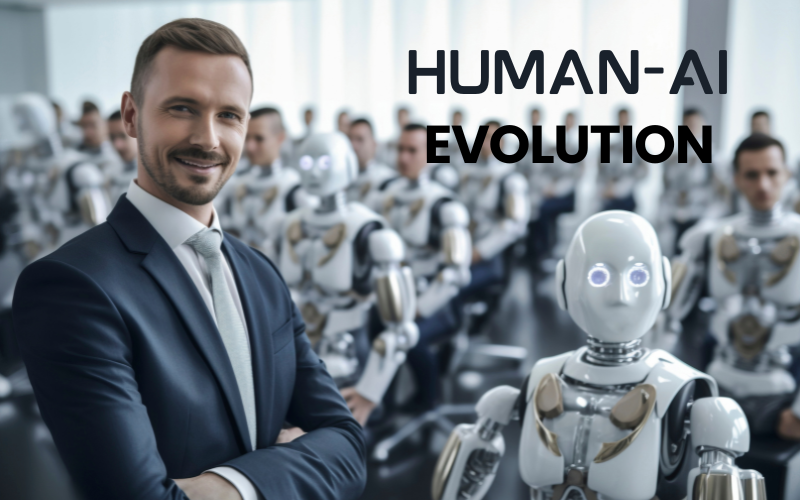
Artificial Intelligence (AI) is no longer the stuff of science fiction. It’s here, and it’s transforming the way we live, learn, work, and care for one another. From personalized education to precision healthcare and economic empowerment, AI holds immense potential to accelerate human development across every corner of the globe.
But with great power comes great responsibility. As AI becomes increasingly integrated into society, it is essential that we harness its potential ethically, equitably, and sustainably.
This blog explores how AI is shaping human development in education, healthcare, economy, and society—along with the challenges we must confront to ensure its benefits are shared by all.
- AI in Education: Learning Beyond Boundaries
Education is the cornerstone of personal and societal growth. AI is revolutionizing this sector by making learning more personalized, accessible, and data-driven.
Personalized Learning
Traditional education often struggles with a one-size-fits-all approach. AI changes that by:
- Adapting to individual learning styles and paces.
- Offering tailored recommendations and assessments.
- Using intelligent tutors and chatbots to provide round-the-clock assistance.
For example, platforms like Khan Academy, Duolingo, and BYJU’S use AI to deliver customized experiences based on student performance.
Resource Optimization
AI can analyze vast educational datasets to:
- Identify learning gaps.
- Suggest improvements to curricula.
- Assist teachers in better targeting their instruction.
Schools and governments can use AI to predict dropouts or measure the impact of teaching methods—leading to better educational outcomes.
Accessibility for All
AI breaks barriers for marginalized learners:
- Text-to-speech, speech recognition, and real-time translations aid students with disabilities.
- Remote learning tools powered by AI bring education to rural and underserved areas.
- AI-enabled apps help those with visual or hearing impairments learn more independently.
In short, AI is turning education into a more inclusive and equitable process.
- AI in Healthcare: Smarter Systems, Healthier Lives
In the healthcare sector, AI is not just improving patient outcomes—it’s saving lives.
Improved Diagnosis and Early Detection
AI systems can process medical images (X-rays, MRIs) faster and often more accurately than human doctors. Tools like Google’s DeepMind and IBM’s Watson Health assist in:
- Detecting cancers at early stages.
- Analyzing genetic data for rare diseases.
- Flagging abnormalities in scans.
AI also supports epidemiological forecasting—predicting disease outbreaks like COVID-19 before they spread uncontrollably.
Personalized Treatment
AI helps tailor treatments to individual patient profiles using data from:
- Genetic sequencing.
- Electronic health records.
- Wearable devices.
This leads to precision medicine, where treatments are optimized for efficacy and minimal side effects.
Enhanced Operational Efficiency
AI reduces the burden on healthcare systems by automating:
- Appointment scheduling.
- Billing and insurance processing.
- Managing patient records and follow-ups.
This frees up healthcare professionals to focus more on patient care rather than paperwork.
Remote Healthcare Access
AI chatbots, telemedicine platforms, and virtual care assistants extend quality healthcare to remote and underserved communities—bridging the gap in healthcare access.
- AI and Economic Growth: Automation Meets Innovation
AI is transforming global economies by boosting productivity, creating jobs, and improving access to financial services.
Increased Productivity and Efficiency
AI-driven automation streamlines operations across sectors like:
- Manufacturing
- Agriculture
- Retail
- Logistics
Machines handle repetitive tasks, allowing humans to focus on creativity, strategy, and innovation. Businesses that integrate AI into their operations often see higher output, lower costs, and better decision-making.
New Job Creation
While automation may displace some roles, AI is also generating demand for:
- AI engineers and data scientists
- AI ethics and policy experts
- Trainers for AI models
- Support staff for AI applications
Governments and companies must invest in reskilling and upskilling programs to prepare workers for the jobs of the future.
Access to Finance
AI-driven tools like chatbots, robo-advisors, and credit scoring systems help individuals and small businesses:
- Apply for loans and insurance.
- Manage finances via mobile banking apps.
- Access investment advice with minimal fees.
This is particularly valuable in developing economies, where traditional banking systems often exclude the underprivileged.
- Social Impact: Building an Inclusive and Sustainable World
AI also holds transformative power for social welfare, inclusion, and environmental sustainability.
Smarter Social Programs
Governments can use AI to:
- Identify at-risk populations.
- Optimize distribution of welfare benefits.
- Monitor and evaluate social initiatives in real-time.
This leads to better-targeted support systems that reduce waste and corruption.
Addressing Inequality
AI can democratize access to:
- Quality education and healthcare
- Employment opportunities
- Legal and financial services
However, this requires deliberate efforts to design AI systems with inclusion and diversity in mind.
Combating Climate Change
AI applications in environmental science include:
- Monitoring deforestation, pollution, and wildlife via satellite imagery.
- Optimizing energy consumption in smart cities.
- Improving crop yields through predictive farming tools.
In this way, AI becomes a critical ally in sustainable development and climate resilience.
Challenges and Ethical Considerations
While AI offers exciting opportunities, it also presents serious challenges that must be addressed.
Equity and Access
Not everyone has equal access to AI-powered tools or infrastructure. The digital divide can widen unless efforts are made to:
- Provide affordable internet.
- Support rural and underdeveloped regions.
- Promote open-source and multilingual AI tools.
Bias and Discrimination
AI systems learn from data — and if that data reflects social biases, the AI will too. Examples include:
- Biased hiring algorithms
- Discriminatory facial recognition
- Racial profiling in law enforcement tech
To ensure fairness, developers must use transparent datasets, inclusive design, and human oversight.
Job Displacement
Automation threatens some traditional jobs, particularly in manufacturing and administrative roles. The solution lies in:
- Fostering lifelong learning.
- Offering retraining programs.
- Supporting entrepreneurship.
Data Privacy and Security
AI relies heavily on data, raising concerns around:
- Surveillance
- Consent
- Data breaches
We need robust regulations, ethical AI guidelines, and secure systems to protect individual rights.
Human-Centered AI: The Way Forward
To maximize AI’s potential in human development, a human-first approach must guide its design, implementation, and governance. Here are some principles for ethical AI:
- Transparency: Open algorithms and clear usage policies.
- Fairness: Mitigate bias and promote inclusivity.
- Accountability: Clear ownership of AI decisions.
- Privacy: Respect and safeguard personal data.
- Collaboration: Multistakeholder engagement — governments, tech companies, civil society, and communities.
Conclusion: AI as a Catalyst for Positive Change
Artificial Intelligence is redefining what’s possible — in classrooms, clinics, boardrooms, and beyond. It can empower teachers, support doctors, uplift communities, and rejuvenate economies.
But to ensure AI contributes meaningfully to human development, we must act with intention, foresight, and integrity. This means investing not just in powerful algorithms, but in people, policies, and purpose-driven innovation.
By putting humanity at the heart of AI, we can build a future that is not only smart but also just, inclusive, and sustainable.
If you’re a student, policymaker, tech enthusiast, or business leader—now is the time to engage in shaping ethical AI. Because the future is not just automated. It’s human.