

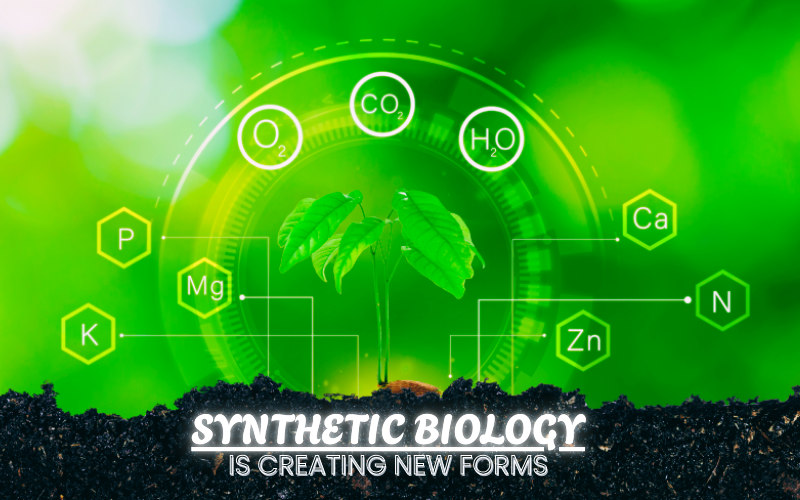
In a quiet laboratory somewhere in the world, scientists are assembling life—not through reproduction, but with software, gene editing, and molecular engineering. This is not science fiction; it’s synthetic biology, a rapidly evolving field at the intersection of biology, engineering, and computer science. In 2025, synthetic biology is no longer just about modifying existing organisms—it’s about designing entirely new life forms with unprecedented possibilities and profound ethical implications.
So how exactly is synthetic biology reshaping life as we know it? Let’s dive into what it is, what it’s achieving, and why it matters more than ever.
What Is Synthetic Biology?
Synthetic biology (synbio) is the science of redesigning organisms for useful purposes by engineering them to have new abilities. It goes beyond traditional genetic engineering by building novel genetic sequences—sometimes even constructing entire genomes from scratch.
Think of it as biological programming: instead of writing code in Java or Python, scientists write DNA code using the four nucleotide letters—A, T, G, and C—to create or alter organisms. The goal? To solve real-world problems in medicine, agriculture, energy, and the environment.
Designing Life from the Ground Up
Unlike natural evolution, which takes place over millennia, synthetic biology allows humans to intentionally design organisms to perform specific tasks—faster, more efficiently, and often with traits nature never developed on its own.
Here’s how scientists are creating new life forms in 2025:
- Creating Minimal Genomes
Researchers are constructing organisms with stripped-down, “minimal” genomes—organisms that contain only the genes absolutely necessary for life. This creates a kind of biological “blank slate” onto which useful genes can be added.
A notable example is Mycoplasma mycoides JCVI-syn3.0, a synthetic bacterium created by the J. Craig Venter Institute. It contains just 473 genes—the fewest of any known living organism.
- Programming Microbes to Produce Useful Substances
Synthetic microbes can be designed to produce:
- Biofuels
- Biodegradable plastics
- Life-saving drugs, like insulin or anti-malarial compounds
- Industrial enzymes for cleaner manufacturing
These bio-factories are replacing traditional chemical processes that are often toxic and energy-intensive.
- Expanding the Genetic Alphabet
Nature uses four letters in DNA—A, T, C, and G. But synthetic biologists have developed artificial base pairs, creating organisms that use a six-letter genetic code. These xeno-nucleic acids (XNA) could lead to proteins and materials never seen in nature.
Applications in Real Life
The possibilities of synthetic biology are vast and growing rapidly. Here are some real-world examples already in play in 2025:
Medicine
- Synthetic vaccines were a game-changer during the COVID-19 pandemic. Today, scientists are designing mRNA vaccines and gene therapies tailored to individual patients.
- Oncolytic viruses, designed via synbio, can target and destroy cancer cells while leaving healthy ones intact.
Agriculture
- Engineered crops with enhanced photosynthesis are improving yields and reducing the need for fertilizers.
- Synthetic microbes in soil can fix nitrogen, reducing the need for chemical fertilizers and protecting ecosystems.
Environmental Science
- Custom organisms are cleaning up oil spills, breaking down plastics, and even capturing carbon from the atmosphere.
- Synthetic algae are being developed to produce food and fuel in carbon-neutral ways.
Energy
- Engineered yeast and bacteria can now produce hydrogen or ethanol sustainably.
- Algae-based biofuels are emerging as a potential replacement for fossil fuels.
Ethical Questions and Risks
As with all revolutionary science, synthetic biology raises serious ethical and safety concerns:
What Defines Life?
Creating life from non-life blurs the line between the biological and the artificial. Philosophers, ethicists, and religious communities are questioning what it means to “create life.”
Biosecurity Risks
Could synthetic organisms be misused to create biological weapons? The same tools that can cure disease could, in the wrong hands, engineer super-pathogens.
Accidental Ecosystem Impact
If synthetic organisms were released into the wild, they could outcompete or harm natural species, leading to unpredictable ecological consequences.
That’s why many labs follow strict containment protocols and governments are pushing for global bioethics frameworks and tighter regulation.
The Future of Synthetic Life
In the next few years, synthetic biology may deliver breakthroughs we can scarcely imagine today:
- Living materials that grow, self-repair, or respond to their environment
- Biological sensors that detect toxins or disease markers in real time
- Personalized medicine, where treatments are tailored down to your unique genetic profile
- Space-ready organisms to produce food, oxygen, and fuel for interplanetary travel
As computing power increases and AI enhances our ability to model and design biological systems, synbio will become more powerful, accessible, and mainstream.
Final Thoughts
Synthetic biology is no longer the realm of distant science fiction—it’s today’s science frontier. In 2025, we’re not just editing life—we’re building it. While this comes with serious ethical responsibilities, it also brings the opportunity to solve humanity’s biggest challenges: disease, food scarcity, pollution, and climate change.
As we continue to explore what it means to create life, one thing is clear: the blueprint of life is no longer only nature’s domain. With care, collaboration, and caution, synthetic biology could be the key to a healthier, more sustainable future.