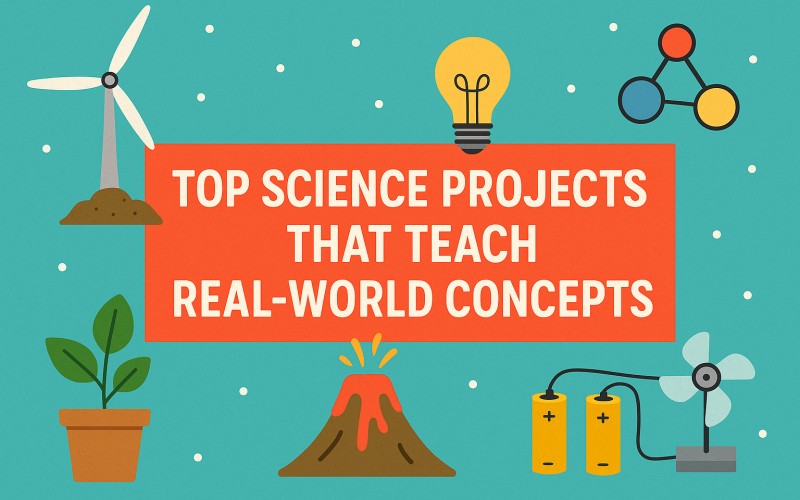
Science is more than just a subject in school — it’s a lens through which we understand the world. When students engage with science hands-on, they don’t just memorize facts; they discover how to ask questions, solve problems, and apply knowledge in real life. Whether you’re a teacher looking to inspire your students, a parent helping with a school project, or a curious learner, here are some top science projects that bring real-world concepts to life.
- Water Filtration System: Understanding Clean Water Access
Concepts Taught: Environmental science, engineering, water cycle
One of the most pressing global issues is access to clean water. A water filtration project introduces students to this challenge and shows them how science can offer solutions.
How to Do It:
Use materials like sand, charcoal, gravel, and coffee filters to build a simple filtration system. Pour dirty water through the layers and observe how each material helps remove impurities.
Real-World Impact:
Students understand how communities use science to create affordable filtration systems in areas where clean water is scarce. This project also promotes awareness of water conservation.
- Solar Oven: Harnessing Renewable Energy
Concepts Taught: Solar energy, sustainability, thermodynamics
With the world shifting toward green energy, teaching students about solar power has never been more relevant.
How to Do It:
Create a solar oven using a cardboard pizza box, aluminum foil, plastic wrap, and black paper. Place a small food item like s’mores or cheese toast inside and observe how sunlight heats and melts it.
Real-World Impact:
This project demonstrates how solar cookers are used in remote or off-grid areas to reduce dependence on firewood or electricity. It also encourages interest in renewable energy technology.
- DIY Weather Station: Predicting the Climate
Concepts Taught: Meteorology, data analysis, weather patterns
Understanding the weather is essential for agriculture, transportation, and disaster preparedness.
How to Do It:
Build basic instruments such as a rain gauge (using a plastic bottle), barometer (with a balloon and jar), and wind vane (using a straw and pencil). Track data over a week.
Real-World Impact:
This project teaches how scientists collect and interpret data to forecast weather and alert communities about storms or droughts. It also encourages observation and record-keeping skills.
- Biodegradable Plastic: Tackling Pollution with Chemistry
Concepts Taught: Chemistry, materials science, environmental issues
Plastic pollution is a major ecological concern. Students can explore sustainable alternatives through chemistry.
How to Do It:
Mix cornstarch, vinegar, water, and glycerin to create a homemade biodegradable plastic. Observe how the mixture changes when heated and how it behaves once cooled and dried.
Real-World Impact:
This project opens discussions about single-use plastics, microplastics, and how innovative materials can solve environmental problems. It also links chemistry to eco-conscious innovation.
- Heart Rate and Exercise: The Biology of Fitness
Concepts Taught: Human biology, health science, data collection
This experiment brings science into everyday fitness and health, showing how our bodies respond to movement.
How to Do It:
Measure your resting heart rate. Then perform a simple exercise like jumping jacks or running in place for 1 minute. Measure your heart rate immediately afterward and again after 2 and 5 minutes.
Real-World Impact:
This project explains cardiovascular health, the importance of exercise, and how fitness affects heart rate recovery. It’s especially relevant in today’s health-conscious world.
- Plant Growth and Light: Exploring Photosynthesis
Concepts Taught: Botany, photosynthesis, experimentation
Plants are vital to life on Earth, and understanding how they grow helps students connect to nature and food systems.
How to Do It:
Grow plants under different light conditions (sunlight, artificial light, no light). Record growth over time and analyze differences.
Real-World Impact:
This project explains how plants produce oxygen and food, and why light is crucial to agriculture. It can lead to deeper exploration of hydroponics and urban gardening.
- Balloon Rocket: Newton’s Laws in Action
Concepts Taught: Physics, motion, forces
Understanding motion and force is foundational in physics — and balloon rockets are a fun and clear way to demonstrate these principles.
How to Do It:
Thread a string through a straw, tie each end of the string to two chairs, and tape an inflated balloon (don’t tie it) to the straw. Let go and watch it fly.
Real-World Impact:
This simple project illustrates Newton’s Third Law and mimics how propulsion works in real rockets. It’s a gateway into aerospace engineering and STEM careers.
- Oil Spill Cleanup Simulation: Environmental Responsibility
Concepts Taught: Ecology, environmental science, problem-solving
Oil spills can be catastrophic for marine life. This project simulates a spill and lets students test cleanup strategies.
How to Do It:
Fill a pan with water and add cooking oil. Use items like sponges, cotton balls, and paper towels to attempt to clean up the oil. Measure effectiveness.
Real-World Impact:
Students explore the complexity of real-life environmental disasters and the importance of science in disaster response. It also teaches empathy for ecological issues.
Conclusion: Science That Matters
Science education becomes truly powerful when it moves beyond the textbook and into the real world. These projects aren’t just about getting a good grade — they teach critical thinking, problem-solving, and environmental responsibility. Whether it’s creating sustainable materials or understanding how the human body works, each of these projects brings real-world relevance into the classroom or home.