
Why Fear Feels Good: Horror Films & the Science of It
Explore why fear feels good in horror films, delving into the science behind the thrill, adrenaline rush, and psychological effects.
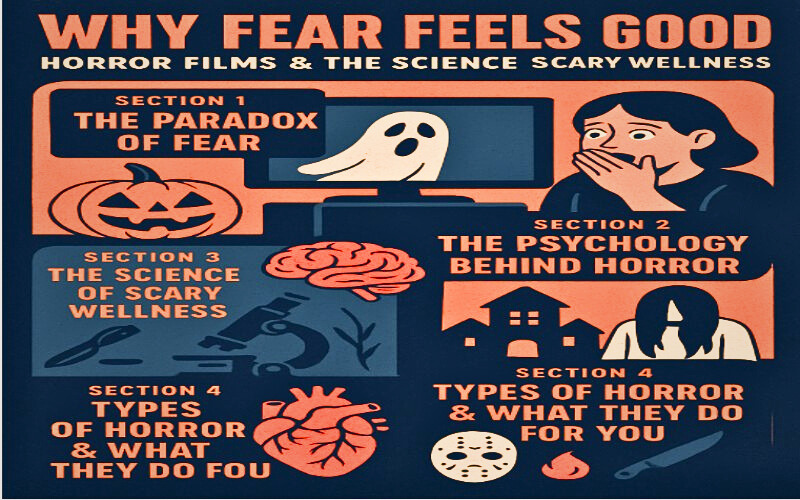
In a world where self-care is often associated with bubble baths, green tea, and yoga, one self-care ritual seems wildly out of place—watching horror films. Why would anyone willingly choose to feel fear, tension, or dread, especially when life is already stressful?
And yet, millions of people around the world find comfort, catharsis, and even joy in scary movies. Whether it's a classic ghost story, a spine-chilling thriller, or a blood-soaked slasher, horror continues to draw in audiences—and surprisingly, it may even be good for us.
This might sound counterintuitive, but science says otherwise.
Welcome to the world of scary wellness—a fascinating blend of psychology, neuroscience, and storytelling that explains why fear feels good, and how horror films can actually improve our mental and emotional health.
Section 1: The Paradox of Fear
Let’s start with the big question: Why do we enjoy being scared? Fear is a basic human emotion designed for survival. It triggers the fight-or-flight response, activating our sympathetic nervous system to prepare us for danger. You'd think this would be unpleasant, yet many people seek it out. In controlled settings—like a movie theater or your living room—fear becomes safe. Your brain knows you're not actually in danger, but your body still reacts. This gives you a neurochemical cocktail of:- Adrenaline: Increases alertness and energy.
- Endorphins: Pain-relief chemicals that create pleasure.
- Dopamine: The reward chemical that makes the experience enjoyable.
Section 2: The Psychology Behind Horror
Horror taps into primal fears: death, isolation, the unknown, and helplessness. But instead of harming us, exposing ourselves to fear in a controlled environment can offer emotional benefits.- Stress Relief Through Emotional Catharsis
- A safe outlet for anxiety.
- A way to process repressed fears.
- Relief after the scary moment ends—your body relaxes and your mind resets.
- Confronting Inner Demons
- Psychological Resilience
Section 3: The Science of Scary Wellness
Let’s dive into some fascinating findings from neuroscience and psychology:- Horror and Heart Health
- Horror Sharpens Cognitive Function
- Emotional regulation
- Pattern recognition
- Anticipation and prediction
- Post-Horror Relaxation
Section 4: Types of Horror & What They Do for You
Not all horror is created equal. Different subgenres offer different types of psychological rewards:- Supernatural Horror (e.g., The Conjuring, Tumbbad)
- Taps into cultural myths, religion, and fear of the unknown.
- Promotes reflection on mortality and spirituality.
- Survival Horror (e.g., A Quiet Place, Train to Busan)
- Focuses on family bonds, perseverance, and instinct.
- Strengthens empathy and emotional resilience.
- Slasher Films (e.g., Halloween, Psycho)
- Cathartic and adrenaline-driven.
- Often about rule-breaking, justice, and survival instincts.
- Psychological Horror (e.g., Get Out, Shutter Island, 13B)
- Challenges perception and identity.
- Engages deep critical thinking and introspection.
- Horror-Comedy (e.g., Stree, Shaun of the Dead)
- Blends fear and humor, helping us laugh through anxiety.
- Perfect for reducing stress without emotional overload.
Section 5: Horror Films That Heal (Yes, Really)
Looking for scary movies that not only thrill but soothe your soul in the end? Here are some recommendations:Get Out (2017) – English
A psychological and social horror that confronts racial tension with style and intellect. Why it heals: It turns horror into empowerment and social commentary.Tumbbad (2018) – Hindi
A dark folktale wrapped in greed, mythology, and haunting visuals. Why it heals: It invites reflection on generational trauma and human desire.The Babadook (2014) – English
A mother and child face a terrifying presence that is really a metaphor for grief. Why it heals: A masterclass in emotional repression and acceptance.A Quiet Place (2018) – English
A post-apocalyptic thriller about a family who must stay silent to survive. Why it heals: It showcases love, sacrifice, and communication in silence.Stree (2018) – Hindi
A horror-comedy rooted in Indian folklore and gender politics. Why it heals: It balances scares with satire and empowers femininity.Section 6: Horror as Social Connection
Believe it or not, watching horror films can actually strengthen relationships.- Couples Who Scream Together…
- Horror & Group Bonding
- Horror & Identity
Section 7: When Horror Isn’t Helpful
Of course, horror isn’t for everyone—and that's okay. For some individuals, horror can:- Trigger past trauma
- Cause nightmares or anxiety
- Lead to desensitization if overconsumed
Section 8: How to Make Horror Part of Your Wellness Ritual
You can actually integrate horror films into a mindful routine. Here's how:- Set Intentions
- Create a Safe Space
- Reflect After the Film
- Follow with Grounding Rituals
Final Thoughts: Embracing the Dark to Find the Light
Horror isn’t just blood and screams—it’s a profound artistic genre that explores the darkest corners of the human mind and culture. It allows us to wrestle with real-world fears in a controlled, safe space. It gives us adrenaline without threat, insight without lectures, and a strangely satisfying sense of calm after the storm. So next time someone scoffs at your horror movie obsession, tell them this: “I’m not scared—I’m healing.” Whether you’re screaming at jump scares, pondering moral dilemmas, or laughing nervously at haunted dolls, remember that embracing fear might just be one of the most powerful—and unexpected—forms of self-care we have.
Comments
Leave a comment Replying to
Comments are reviewed before they appear. Your email is never published.