
Smart Eating During Festive Feasts
Enjoy festive feasts without the guilt by making smart eating choices. Balance indulgence with healthy options this holiday season.
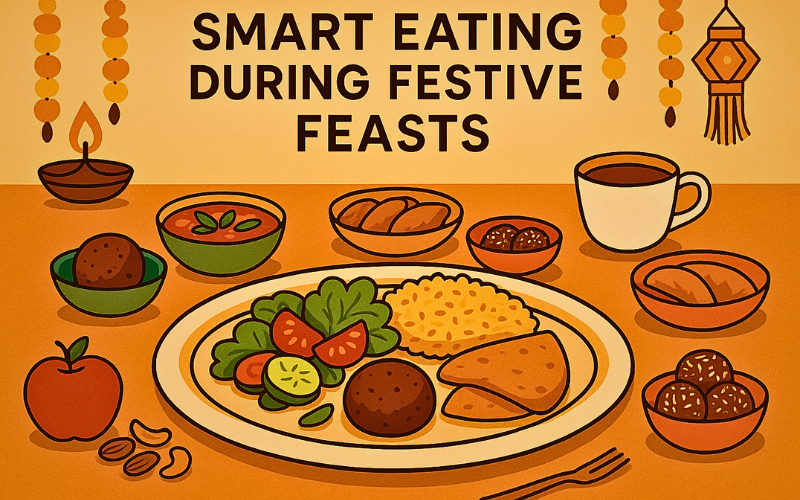
Why Festive Eating Needs Mindfulness
The festive season tends to disrupt routine. Sleep gets erratic, exercise routines falter, and the dining table overflows with rich, calorie-dense dishes. While it’s okay to indulge occasionally, continuous overeating can:- Upset digestion
- Spike blood sugar levels
- Cause weight gain
- Lead to fatigue or lethargy
- Weaken immunity
Smart Eating: The Mindset Shift
Before diving into what to eat, start with how to think about food during festivals. These mindset shifts set the tone for healthy enjoyment:- Balance, Not Deprivation
- Plan, Don’t Punish
- Savor Mindfully
- Stay Guilt-Free
Pre-Festive Meal Planning: What to Eat Before the Feast
What you eat before a feast influences how your body handles the heavy meal later.Ideal Pre-Feast Habits:
- Start the day light: Have warm lemon water, herbal tea, or jeera water.
- Choose protein-rich and fiber-rich meals in the morning: oats, dalia, eggs, sprouts, or curd with fruits.
- Eat something healthy before the party: A bowl of soup, a handful of nuts, or a banana with nut butter can prevent you from binge-eating at the event.
Avoid:
- Skipping meals in anticipation of overeating later (this leads to poor food choices).
- High-sugar snacks in the day—they crash your energy.
- Excess tea or coffee—they dehydrate the body and increase acidity.
At the Feast: Smart Food Choices That Satisfy
Festive buffets and thalis offer dozens of tempting options. Here's how to navigate the spread with joy and wisdom:- Scan Before You Fill
- Follow the Half-Quarter-Quarter Rule
- 50% vegetables or salads
- 25% protein-rich items (paneer, legumes, lean meats, dals)
- 25% carbs or indulgent items (fried snacks, sweets, rice)
- Prioritize Whole Foods
- Less oil or ghee
- Visible vegetables
- Less sugar and cream
- Grilled over fried
- Roti over naan/paratha
- Dry fruits over sugary mithai (when possible)
- Watch Your Portions
- Hydrate Smartly
- Sip warm water or infused water (mint, lemon) before and after meals.
- Avoid too many sugary drinks or mocktails.
- Say no to aerated beverages—they bloat and spike sugar.
Sweet Tooth Without the Sugar Crash
Sweets are the heart of festivals—and that’s okay! You can still satisfy your sweet tooth without going overboard.Smarter Dessert Tips:
- Share a dessert or take a half portion.
- Eat desserts after meals, not between, to reduce insulin spikes.
- Choose natural sweeteners when cooking at home: dates, jaggery, honey, stevia.
- Try sweets made with ragi, oats, coconut, or dry fruits.
- Balance a sugary sweet with a protein or fiber source to slow absorption.
DIY Healthy Sweets:
- Dates and nuts laddoo
- Baked coconut barfi with jaggery
- Homemade fruit custard with almond milk
- Oats halwa with ghee and cardamom
Move More, Sit Less (Even During Celebrations)
Staying active during the festive season helps your metabolism process all the food you’re enjoying.Simple Ways to Move:
- Take a 10-minute walk after every big meal.
- Help out with setting or cleaning the table.
- Try fun dance sessions at family get-togethers.
- Do 15–20 minutes of yoga or stretching in the morning.
Post-Feast Recovery: Getting Back on Track
What you do after the celebration is just as important.The Day After:
- Drink warm water with lemon or ginger to detoxify.
- Eat light and hydrating meals: moong dal khichdi, vegetable soups, porridge.
- Do gentle yoga or go for a walk to kickstart digestion.
- Avoid skipping meals—just go light and nourishing.
Reset Meals:
- Breakfast: fruit smoothie with flaxseeds or poha with veggies
- Lunch: soup + salad or moong dal rice
- Dinner: clear vegetable soup + whole grain toast or khichdi
- Snacks: coconut water, buttermilk, roasted seeds
Festive Beverage Smarts
Drinks can be sneaky calorie-bombs, especially when filled with sugar, cream, or alcohol.Better Beverage Choices:
- Spiced herbal teas (tulsi, cinnamon, ginger)
- Unsweetened coconut water
- Fruit-infused water
- Homemade lemonade with rock salt and honey
- Warm turmeric milk at night
- Sugary soft drinks
- Canned juices
- Alcoholic cocktails with syrup bases
Family Tips: Keep Everyone Healthy & Happy
Festivals bring families together—why not share health as well?- Encourage kids to try home-made festive snacks.
- Involve everyone in cooking lighter versions of traditional dishes.
- Start a post-meal walk ritual as a family bonding time.
- Gift dry fruit boxes or tea blends instead of sugary treats.
- Teach children the joy of balance, not restriction.
Bonus Tip: Sleep Is Still Sacred
Don’t let late-night parties or Netflix binges disrupt your circadian rhythm. Lack of sleep leads to:- Poor digestion
- More sugar cravings
- Lower immunity
- Mood swings
Smart Swaps for Classic Festive Foods
Here’s how to recreate indulgent favorites without the heavy load:| Traditional Dish | Smart Swap |
| Deep-fried samosas | Baked or air-fried samosas |
| Creamy paneer gravies | Tomato-based or cashew-curd gravies |
| White sugar sweets | Jaggery, dates, or stevia-based versions |
| Refined maida desserts | Ragi, atta, or oats-based sweets |
| Full-fat dairy sweets | Almond or coconut milk versions |
| Ghee-heavy halwa | Ghee + jaggery + oats halwa with dry fruits |
Final Thoughts: Eat with Joy, Not Just Discipline
Festivals are about connection, culture, and celebration—and food is a big part of that experience. The key is not to fear food but to eat consciously, enjoy slowly, and celebrate health alongside happiness. Smart eating is not a diet—it’s a skill. One that helps you enjoy the richness of your traditions while taking care of your body and mind. So this festive season:- Say yes to your grandma’s laddoo—just one.
- Dance a little more.
- Sip your spiced chai.
- Rest deeply.
- Laugh louder.
- And let balance be your new ritual.

Comments
Leave a comment Replying to
Comments are reviewed before they appear. Your email is never published.