

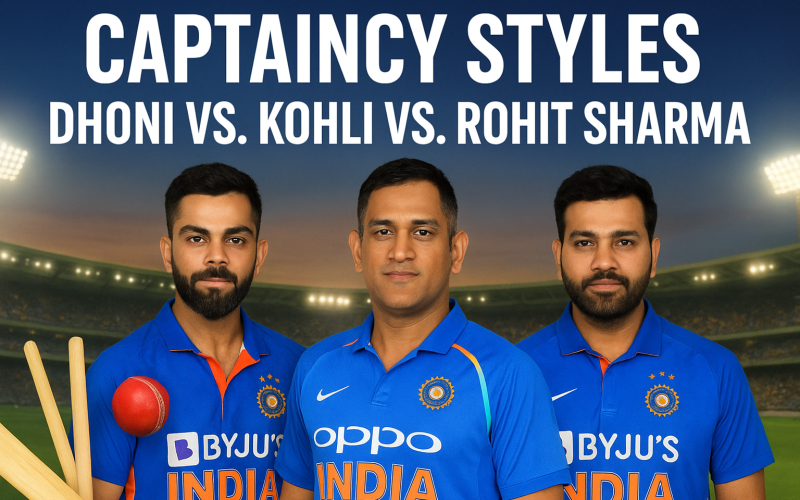
Cricket is not just a sport in India—it’s an emotion. Over the years, the Indian cricket team has seen many great leaders, but three names stand tall in the modern era: Mahendra Singh Dhoni, Virat Kohli, and Rohit Sharma. Each of these stalwarts has led the team with a unique style, leaving a lasting mark on Indian cricket. While Dhoni’s calmness, Kohli’s aggression, and Rohit’s tactical sharpness have shaped India’s journey across formats, comparing their captaincy styles gives us an interesting look at how leadership can influence outcomes.
Dhoni: The Captain Cool
Mahendra Singh Dhoni, fondly known as “Mahi” or “Captain Cool,” took over the captaincy at a time when Indian cricket needed a steady hand. Known for his composure under pressure, Dhoni was never one to lose his calm, no matter how tense the situation.
Key Features of Dhoni’s Captaincy:
- Ice-cool Temperament – Dhoni rarely showed emotions on the field, which helped the team stay grounded.
- Backs His Players – From trusting a young Joginder Sharma in the 2007 T20 World Cup final to giving opportunities to budding talents, Dhoni always believed in nurturing players.
- Sharp Decision-Making – His instinctive calls, such as giving the last over to Joginder Sharma or promoting himself in the 2011 World Cup final, are now legendary.
- Defensive Yet Practical – Dhoni preferred a safety-first approach, ensuring the team did not collapse under pressure.
Achievements Under Dhoni:
- 2007 ICC T20 World Cup (India’s first ever)
- 2011 ICC Cricket World Cup (ending a 28-year wait)
- 2013 ICC Champions Trophy
- Consistent Test success, making India the No. 1 Test side
Dhoni’s legacy lies not just in trophies but in creating a culture of trust, calmness, and fearless cricket.
Kohli: The Aggressive Leader
Virat Kohli, known for his fiery attitude and unrelenting energy, brought in a different flavor of leadership after Dhoni. If Dhoni’s mantra was “calm and calculated,” Kohli’s was “aggressive and fearless.”
Key Features of Kohli’s Captaincy:
- High Intensity – Kohli’s aggressive body language and celebrations often mirrored his hunger to win.
- Fitness Revolution – He set new fitness benchmarks, transforming the team into one of the fittest units in world cricket.
- Backed Fast Bowlers – Kohli emphasized building a world-class pace attack, giving India the ability to win Tests abroad.
- Attacking Mindset – Whether in Tests or limited overs, Kohli believed in going for the kill rather than playing safe.
Achievements Under Kohli:
- Historic Test series win in Australia (2018–19)
- Took India to the World Test Championship Final (2021)
- Maintained an excellent Test record, especially overseas
- Record-breaking winning percentage as India’s Test captain
While he couldn’t secure an ICC trophy, Kohli’s leadership style created a fearless, fit, and aggressive Indian team that could take on any challenge globally.
Rohit Sharma: The Tactical Master
Rohit Sharma, who took over the full-time captaincy after Kohli, is often described as a tactical genius. Unlike Dhoni’s calmness or Kohli’s aggression, Rohit blends strategy, composure, and flexibility.
Key Features of Rohit’s Captaincy:
- Calm but Not Passive – Rohit doesn’t lose his cool but isn’t afraid to show emotions when needed.
- Sharp Tactical Brain – Known for his field placements and bowling changes, he is considered one of the smartest captains in T20 cricket.
- Excellent Man-Manager – Players often say Rohit’s ability to keep the dressing room light and positive makes him approachable.
- Attacking Yet Balanced – Rohit knows when to push for aggression and when to hold back.
Achievements Under Rohit:
- 5 IPL titles with Mumbai Indians (most successful IPL captain)
- Asia Cup 2018 (won as stand-in captain)
- Led India to finals of major ICC tournaments (WTC 2023, ODI World Cup 2023)
- Building consistency in all three formats
Rohit’s leadership is still unfolding, but he has already shown signs of being a calculated risk-taker with a deep understanding of the modern game.
Comparing the Three Leaders
| Attribute | Dhoni (Calm) | Kohli (Aggressive) | Rohit (Tactical) |
| Temperament | Cool, composed | Fiery, intense | Calm but expressive |
| Approach | Safety-first, instinctive | Attacking, bold | Balanced, tactical |
| Player Management | Backs youngsters | Demands high standards | Keeps atmosphere light |
| Major Strength | Handling pressure | Building fitness & pace culture | Strategic field settings |
| ICC Trophies | 3 | 0 | Yet to win |
Conclusion
Leadership in cricket is more than just making decisions—it’s about inspiring a team to believe in themselves. Dhoni, Kohli, and Rohit each represent different shades of captaincy: Dhoni’s calmness, Kohli’s fire, and Rohit’s tactics.
- Dhoni gave India belief and composure on the world stage.
- Kohli transformed India into a fit, aggressive, and dominant Test side.
- Rohit is steering India with tactical nous, aiming to combine aggression with stability.
Each has been successful in his own way, proving that there is no single formula for leadership. What matters is adapting to the team’s needs, the situation, and the era. And in that sense, Indian cricket has been blessed with three of the finest captains of modern times.