
How to Choose the Right Cricket Bat or Football Cleats
Learn how to choose the right cricket bat or football cleats, ensuring comfort, performance, and durability for your game.
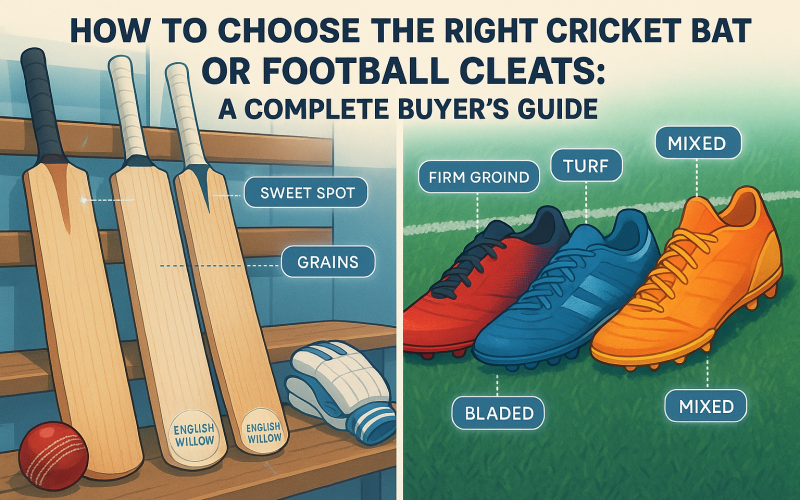
Whether you're smashing boundaries on the cricket pitch or sprinting down the football field, the right gear can make all the difference. Cricket bats and football cleats are not just equipment – they are extensions of an athlete’s style, technique, and strategy. In this blog, we’ll break down everything you need to know to choose the right cricket bat or football cleats, especially if you're a beginner or an amateur athlete looking to level up.
If the bat feels too heavy or long, your stroke play will suffer.
Part 1: How to Choose the Right Cricket Bat
Choosing the right cricket bat is a crucial decision for any cricketer. From weight and size to willow type and handle design, multiple factors affect performance.1. Know Your Bat Size
Choosing the right bat size ensures proper swing, control, and timing. Bats are categorized from Size 1 to Size 6 for juniors and Harrow, SM, SH (Short Handle), or LH (Long Handle) for adults.| Age Group | Recommended Size |
| 5–7 yrs | Size 2 |
| 8–10 yrs | Size 4 |
| 11–13 yrs | Size 6 |
| 14+ yrs (5'5"–6') | Short Handle (SH) |
| 6'+ | Long Handle (LH) |
2. English Willow vs Kashmir Willow
English Willow is the preferred choice for professionals due to its:- Softer grain
- Better ping (rebound effect)
- Lightweight nature
- Higher cost
- Beginners
- Tennis ball cricket
- Practice purposes
3. Bat Weight and Balance
- Lightweight bats (2.6–2.8 lbs) are great for fast wrist play and horizontal shots (cuts, pulls).
- Heavier bats (2.9–3 lbs) provide more power, ideal for front-foot players.
4. Handle Type: Oval vs Round
- Round handles: Easier grip, ideal for bottom-hand dominant players.
- Oval handles: Promote better control and top-hand technique.
5. Check the Bat’s Sweet Spot
The sweet spot is the area that gives maximum power on impact:- High sweet spot: For bouncy pitches (Australia, South Africa)
- Middle sweet spot: For balanced all-round play
- Low sweet spot: For slow, turning pitches (India, Sri Lanka)
Part 2: How to Choose the Right Football Cleats
Football cleats (also called studs or boots) affect traction, speed, turning, and injury prevention. Whether you play on grass, turf, or indoor, cleats are a game-changer.1. Understand the Playing Surface
Your choice should always begin with the type of surface:- Firm Ground (FG): Natural grass fields. Choose cleats with molded studs.
- Soft Ground (SG): Wet or muddy fields. Go for cleats with detachable metal studs.
- Artificial Ground (AG): Synthetic turf. Use cleats with shorter, hollow studs.
- Indoor Courts: Use flat-soled shoes for grip on wooden floors.
2. Choose the Right Fit and Size
Your cleats should fit like a second skin. Here's what to consider:- No more than a thumbnail’s space at the toe
- Snug around the midfoot
- Comfortable heel lockdown
3. Material: Leather vs Synthetic
- Kangaroo Leather (K-leather): Extremely soft, molds to your foot – loved by pros
- Full-Grain Leather: Durable but heavier
- Synthetic Uppers: Lightweight, water-resistant, and budget-friendly
4. Stud Configuration
The number and placement of studs affect your agility and traction:- Conical studs: Great for rotation and quick turns
- Bladed studs: Offer more grip for sprinting
- Mixed studs: Combine speed and agility
- Defenders: Bladed or mixed for stability
- Forwards: Lightweight with conical for quick cuts
- Midfielders: Balanced stud shape for movement across the pitch
5. Playing Position Matters
- Strikers: Go for lightweight boots with a clean strike zone (e.g., Nike Mercurial, Adidas X)
- Defenders: Prefer more protective boots with better control (e.g., Puma Future)
- Goalkeepers: Need side traction and control for lateral movement (e.g., Adidas Predator)
Bonus Buying Tips
- Always break in your bat or cleats before an important game.
- Don’t buy the most expensive option right away – test a mid-range model first.
- Online reviews and YouTube gear tests are super helpful for brand comparisons.
- Ask a coach or experienced player for recommendations based on your game style.
Final Thoughts
Choosing the right cricket bat or football cleats isn't about picking the flashiest gear – it's about selecting what enhances your performance, comfort, and confidence. Invest in gear that matches your playing conditions, skill level, and goals. The better your tools, the more focused you can be on refining your game. Whether you dream of scoring a century or netting a winning goal, the right equipment can help you turn potential into performance.


Comments
Leave a comment Replying to
Comments are reviewed before they appear. Your email is never published.