
How Sports Reflect the Values of a Nation
Explore how sports reflect a nation's values, from teamwork and perseverance to national pride and cultural identity.
Sports is often considered mere entertainment — a pastime for weekends, an outlet for passion, or a game of skill. But underneath the surface, sports relfect to society. sports reflect who we are as a people, what we cherish as a culture, and how we respond to challenges, competition, and community. From the chants in a stadium to the selection of national teams, sports reveal the heartbeat of a nation.
In 2025, this connection is more visible than ever. As the world becomes more globalized and interconnected, sports continue to act as both a cultural unifier and a platform for individual expression. But how exactly do sports reflect a nation’s values?
- The Spirit of Competition: Individualism vs. Collectivism
Examples:
- USA: Michael Jordan, Serena Williams, Tom Brady — icons of individual greatness.
- Japan: Olympic gymnastics or baseball teams practicing synchronized routines as a unit.
- National Pride and Political Identity
Case Studies:
- India & Cricket: In India, cricket is more than a game. It’s tied to post-colonial identity, national pride, and cultural unity. A victory against England.
- Brazil & Football: Football in Brazil reflects joy, resilience, and creativity — values born from a diverse, passionate society.
- USA & Olympic Dominance: America’s pursuit of Olympic medals aligns with its cultural emphasis on global leadership, competitiveness, and excellence.
- Gender and Equality in Sports
Highlights:
- Norway: Norwegian football offers equal pay for men and women, reinforcing their strong stance on gender equality.
- USA: The U.S. women’s national soccer team is globally successful and has become a symbol of women’s rights in sports.
- Middle Eastern nations: Many have recently begun encouraging women’s participation in sports, showing gradual cultural shifts.
- Class, Access, and Opportunity
Contrasts:
- Kenya: Long-distance running is not only a cultural tradition but also a pathway out of poverty, rooted in rural community pride.
- UK: Rugby union has traditionally been associated with the elite, while football has working-class roots.
- USA: School systems and scholarships promote sports as an equalizer, enabling upward mobility through athletic performance.
- Resilience Through Sports in Crisis
Emotional Moments:
- South Africa 1995 Rugby World Cup: Nelson Mandela’s support of the Springboks was a pivotal moment of racial reconciliation after apartheid.
- Ukraine 2022–2025: Ukrainian athletes have competed globally despite wartime conditions, representing national resistance and strength.
- COVID-19 Pandemic: The return of sports after lockdowns was symbolic — of survival, renewal, and resilience — in nearly every nation.
- Values of Discipline, Fair Play, and Ethics
Examples:
- Germany & Scandinavia: Emphasis on athlete development programs, anti-doping ethics, and sustainable training models.
- Russia: The 2014–2019 state-sponsored doping scandal shook trust in its sporting integrity and reflected a politically charged approach to sports glory.
- India: While rapidly advancing in sports infrastructure, it continues to battle issues like match-fixing in cricket and local corruption.
- Diversity and Multiculturalism
Team Snapshots:
- France: The 2018 FIFA World Cup-winning team included players of African, Caribbean, and Arab descent — reflecting the multicultural nature of modern France.
- Canada: Hockey remains dominant, but rising interest in cricket, soccer, and basketball shows a more inclusive sporting identity driven by immigrant communities.
- Australia: Indigenous representation in rugby and AFL continues to grow, aligning with national conversations about reconciliation.
- Community and Volunteerism
- New Zealand: Rugby is supported by extensive grassroots networks, often powered by local volunteers.
- Japan: School-based sports clubs and community events reinforce shared responsibility and civic pride.
- India: Cricket thrives not only in stadiums but on dusty streets and schoolyards — driven by passion, not profit.
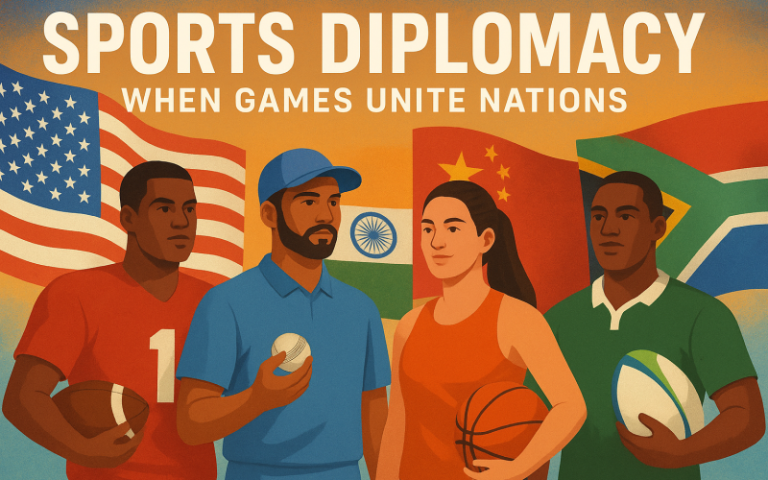
- Sports as Diplomacy
Notable Examples:
- Qatar 2022: The FIFA World Cup was as much a sporting spectacle as it was a showcase of Qatar’s cultural and economic power.
- China 2008 Olympics: A declaration of global arrival and technological modernity.
- India's IPL: Beyond cricket, it's a brand ambassador of modern Indian capitalism and entertainment.
- Youth Development and Future Vision
- USA: College sports are highly institutionalized, acting as pipelines to pro leagues and scholarships.
- Germany: The "DFB Academy" model focuses on skill, psychology, and values, producing stars like Thomas Müller and Joshua Kimmich.
- India: Programs like Khelo India reflect a growing realization that sports can empower youth far beyond medals.


Comments
Leave a comment Replying to
Comments are reviewed before they appear. Your email is never published.